




Future Skills and Beyond: A look into the SPHERE Study Visit

In November, TH Köln welcomed 40 Higher Education Reform Experts (HEREs) from 19 countries to the SPHERE Study Visit ‘Future Skills and Beyond: New Curricula and Learning Innovation for STEM Education‘. In a diverse program, the participants discussed future-oriented strategies for the development of higher education and exchanged ideas on innovative teaching and learning concepts.
SPHERE...
...(Centralised Support to the Network of Higher Education Reform Experts) is an initiative of the European Commission that provides support for modernization processes in higher education.
Executive Summary
On the first day at Campus Südstadt, the international delegation focused on strategic higher education development, future-oriented curricula as well as teaching and learning approaches. On the second day, the experts explored good practices of teaching innovation at Campus Deutz and later concluded their visit at the :metabolon Center for Learning and Research in Lindlar. :metabolon is a cooperation between TH Köln, industrial partners and society, where the delegation gained a thorough look into circular economy. In conclusion the Study Visit at TH Köln left a strong impression on the group, as reflected in the feedback from Michael Gaebel, SPHERE Team [translated by ZLE]:
‘The participants were very impressed by the coherent overall picture of the university, which was presented very clearly and analytically by the president, but also supported and demonstrated by professors, staff and students.’


Strategic Transformation In Higher Education
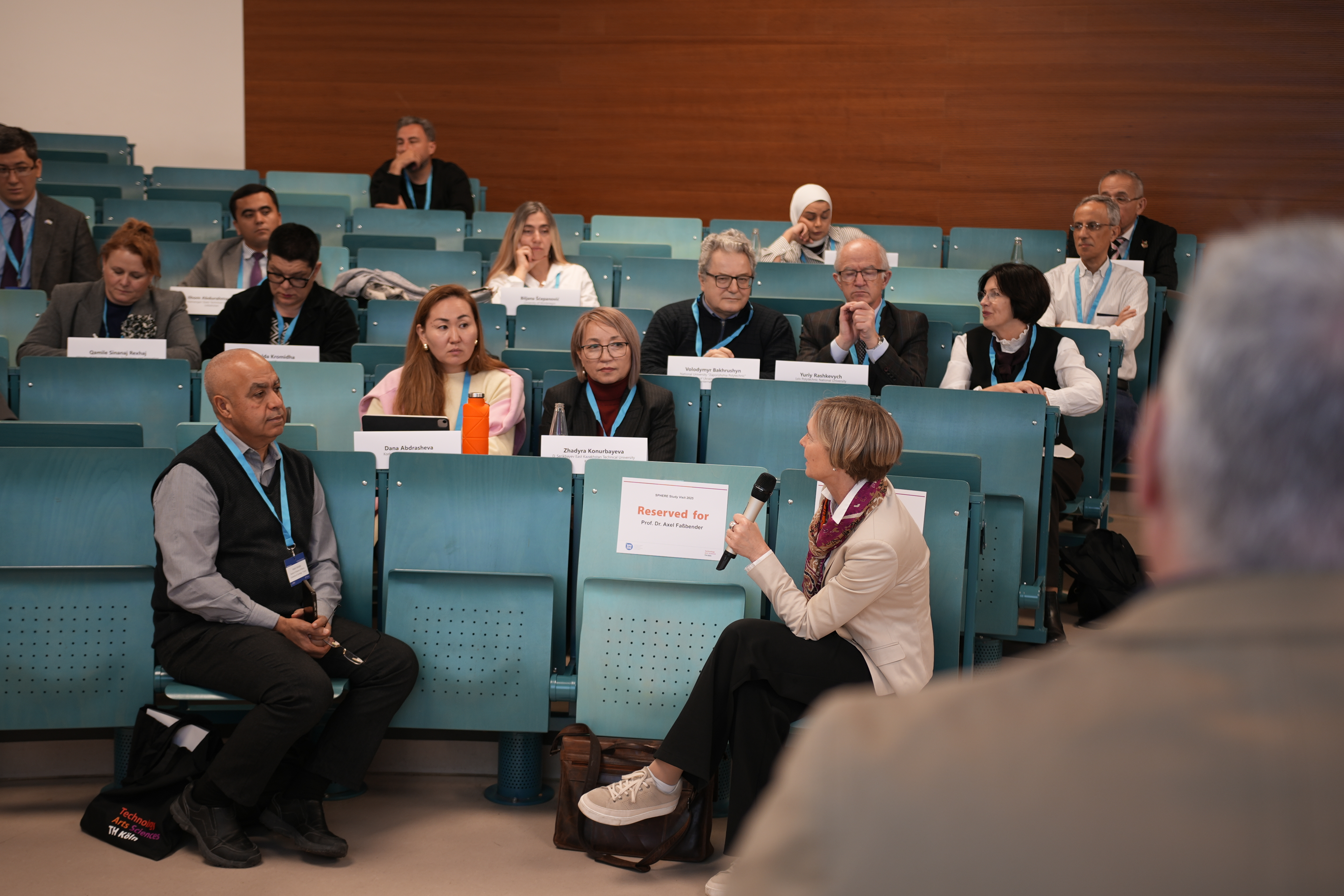
The two-day event began with a warm welcome from Maria Sol Dominguez Parrado from the European Education and Culture Executive Agency and Michael Gaebel. They emphasized the opportunity to actively shape the future of university teaching through exchange and cooperation. Contributions from various areas of the university showed how university development and teaching development are jointly shaped at TH Köln. Prof. Dr. Sylvia Heuchemer (President of TH Köln) outlined TH Köln's path to becoming a transformative university, while Prof. Dr. Axel Faßbender (Vice President for Academic Affairs) presented the strategic anchoring of continuous innovation in study programs. These contributions were supplemented by insights into internationalization strategy of TH Köln: Christina Brey presented the global activities of the Department of International Affairs and Eva Zielasko (Center for Academic Development) explained how Collaborative Online International Learning (COIL) enables internationalisation@home. The HEREs took the opportunity to share their own perspectives in stimulating discussions, while also taking away ideas and impulses for their own higher education contexts.
Designing Future-Ortiented Curricula
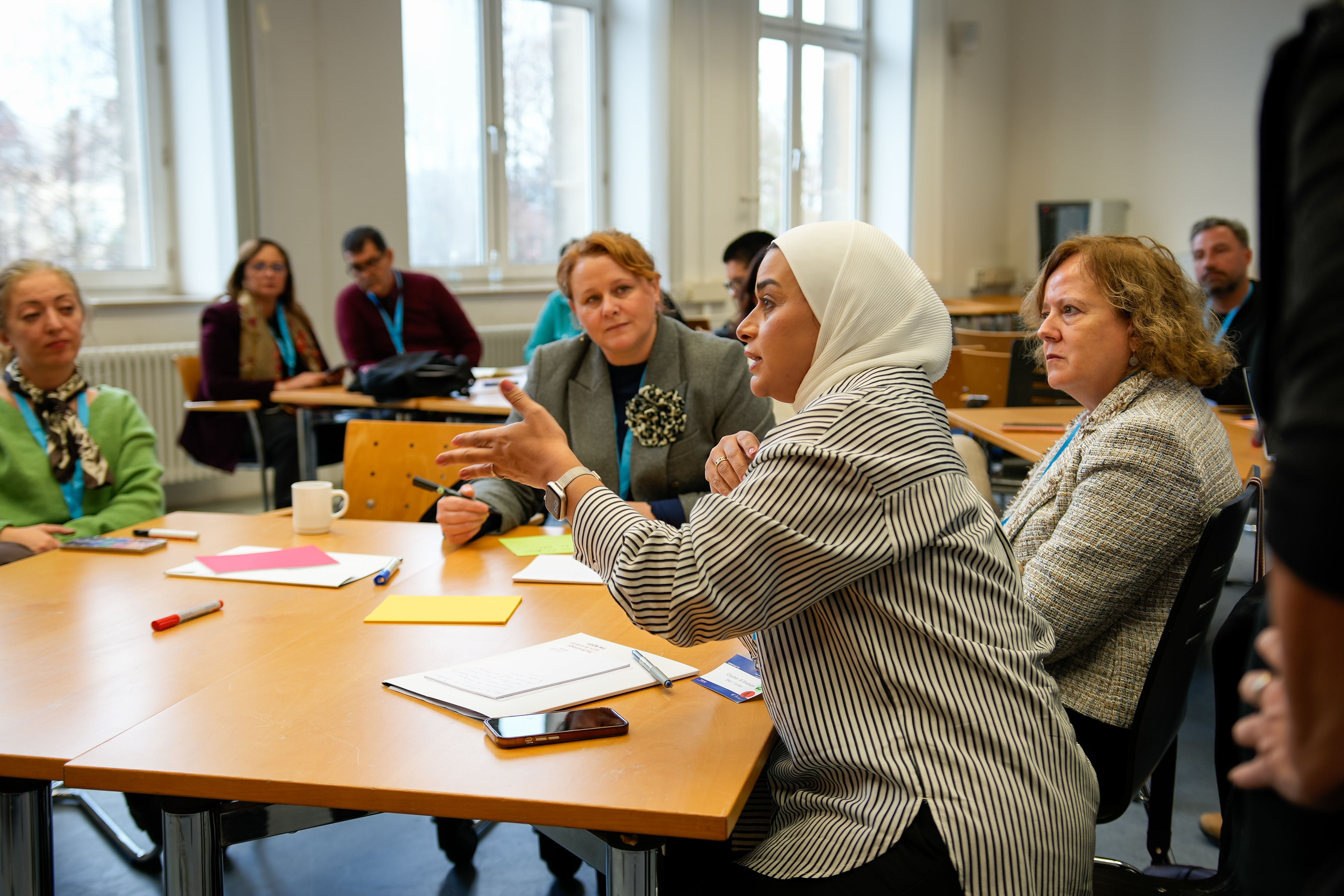
In the afternoon, a variety of workshops offered the opportunity to explore innovative teaching and learning approaches. Under the headline ‘Development of future-oriented curricula’ Lukas Brücher, Prof. Ralf Engels, Farina Koller, Stefanie Spöth, Prof. Dr. Valérie Varney and Prof. Dr. Claudia Ziller offered exciting experimental spaces for exchange and encouraged discussion on future-oriented engineering education. The first day wrapped up with insights into the pedagogical use of AI and game-based learning approaches in teaching as well as initiatives to strengthen data literacy as a key competency in an increasingly data-driven working environment. Prof. Dr Roman Bartnik, Caroline Dick, Dr Elisabeth Kaliva, Prof. Dr Boris Naujoks and Prof. Dr Anja Richert contributed important insights during the afternoon. Through intriguing inquiries and lively discussions among the participants, vibrant and inspiring exchange emerged.


Good Practices In Engineering Programs
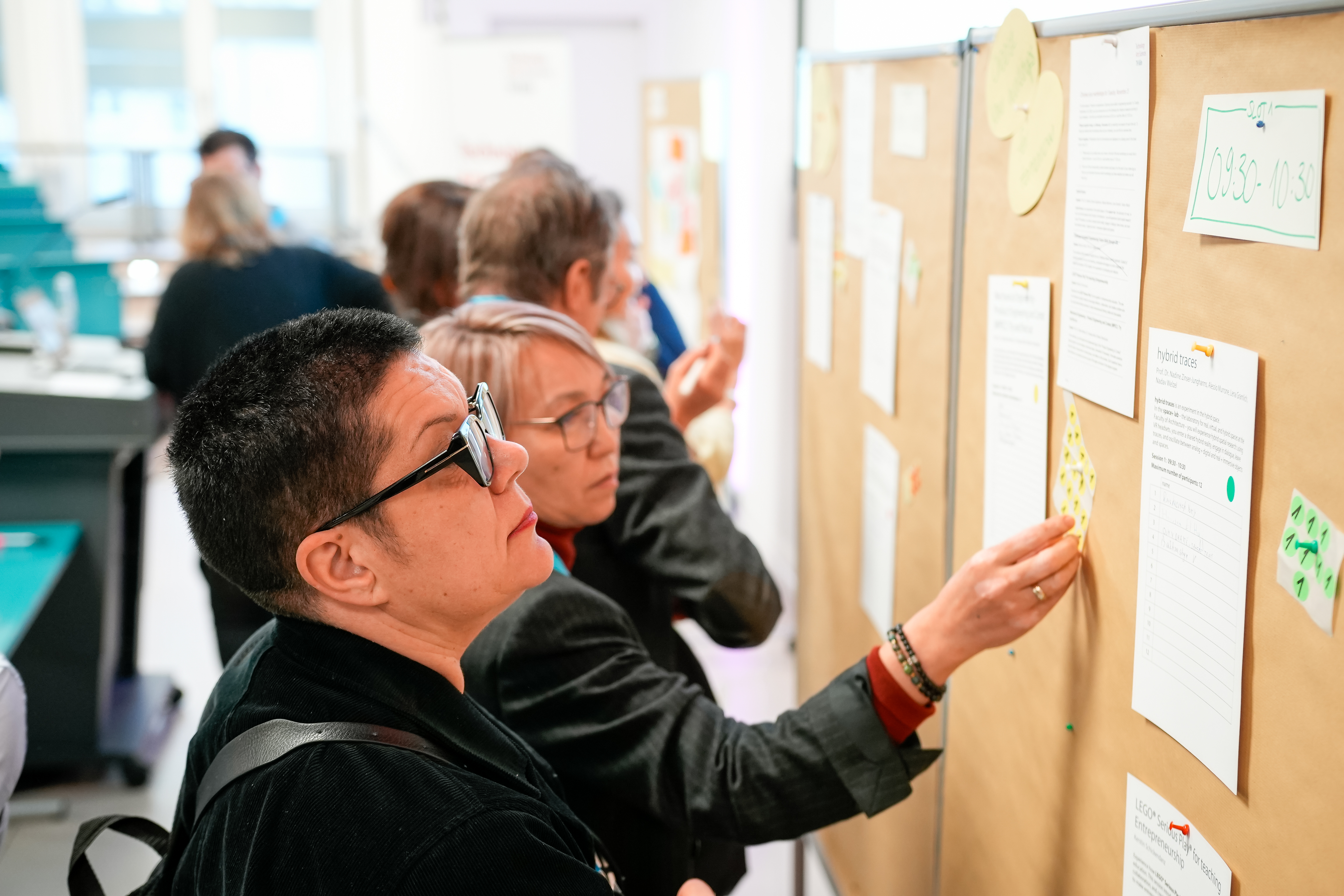
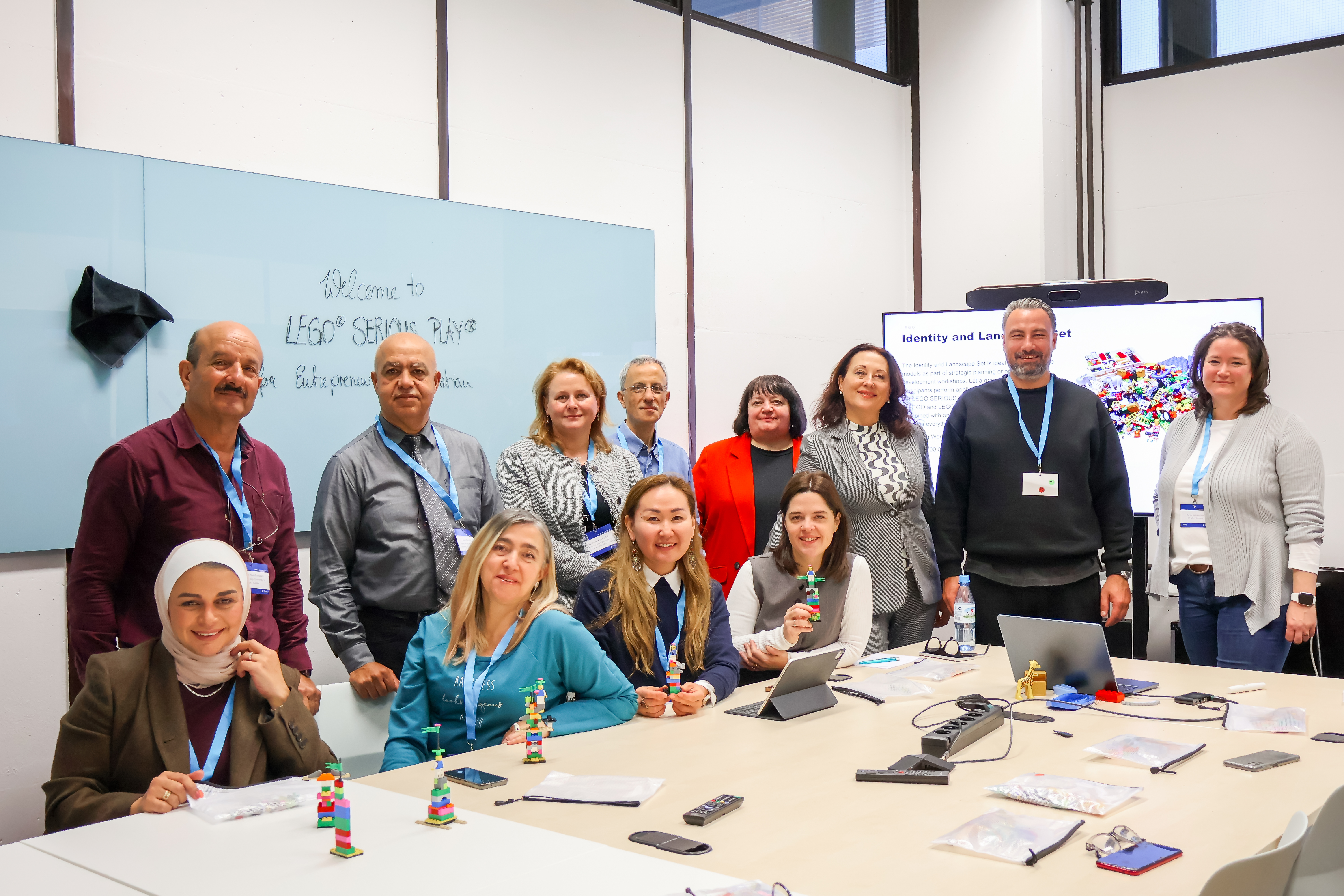
The second day of the event at Campus Deutz deepened the content focus of the first day. Three workshops provided an opportunity to experience innovative approaches from various study programs first-hand. The structure of the ‘Product Engineering and Context (MPEC)’ study program was vividly discussed with Prof. Dr. Stefan Benke, Dr. Vanessa Mai and Robert Steinbüchel. In this study program, students learn in a question-based manner using a product such as the Galakto (an audio player for children). In the ‘hybrid traces’ workshop, with Prof. Dr. Nadine Zinser-Junghanns and students Alessio Murrone, Lena Gramlich and Nadav Welzel, the HEREs immersed themselves in a hybrid teaching concept which enables architecture students to gain a deep understanding of spaces. Furthermore, participants were able to experience creativity and entrepreneurial thinking with Kerstin Schickendanz in a workshop on entrepreneurship and LEGO® Serious Play®.
Experiencing Circular Economy
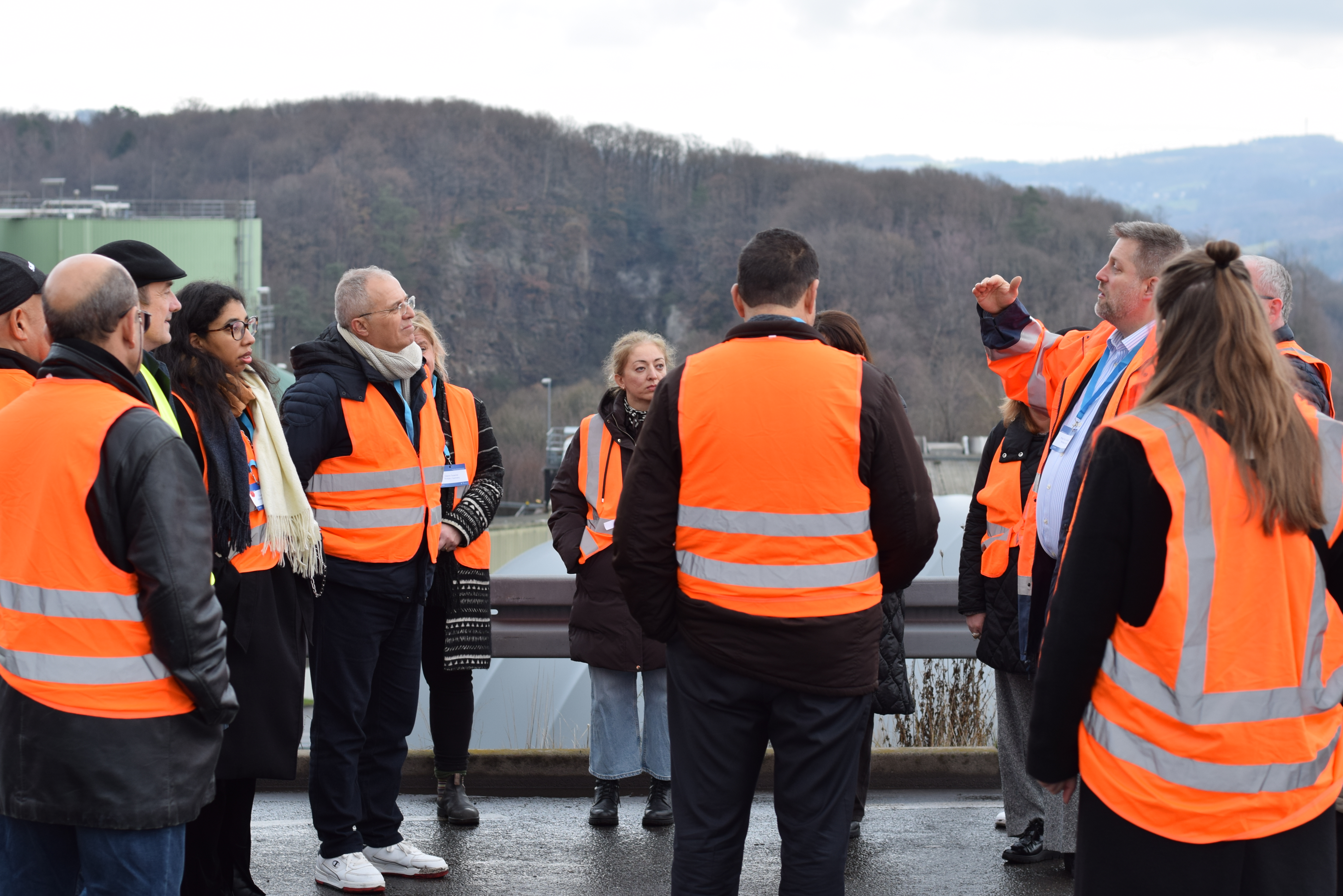
In the afternoon, the participants visited the :metabolon center in Lindlar, where the group was welcomed by Prof. Dr. Christian Wolf and Prof. Dr. Miriam Sartor. They presented their research activities on sustainable waste management and recycling as well as explained how the center collaborates with industry and university partners to develop solutions for the material and energy recovery of waste. Simultaneously, the center serves as a hands-on learning and research environment for students of TH Köln, as well as for various educational institutions catering to different age groups, individuals and families.
During a guided tour, the participants gained insights into current projects and technological developments in the field of circular economy. Afterwards, the HEREs became learners in a problem-based workshop and reflected on the importance of sustainability and material cycles from a systemic perspective.
The Conclusion
The SPHERE Study Visit to TH Köln not only provided professional inspiration, but also numerous opportunities to learn from each other and jointly develop new perspectives for teaching and learning in engineering education (and beyond). TH Köln is grateful for the opportunity to host a SPHERE Study Visit and is delighted with the network that has been initiated and the inspiration gained from the international experts.
November 2025
