



Conference on Digitality and Democracy in November 2026 (B.I.P.)
Blended Intensive Programm (B.I.P.) for staff (researchers and doctoral students) on Digitality and Democracy: Thought Experiments and Scenarios as Interdisciplinary Approaches, at TH Cologne, 16.-20. November 2026.
On the occasion of the tenth anniversary of the interdisciplinary research center DITES, we are planning several activities during the week from Monday 16th to Friday 20th November 2026, under the title "Digitality and Society: Thought Experiments and Scenarios as Interdisciplinary Approaches". We will look back on 10 years of expertise in the area of Digitality and Society as well as try to take a peek into the future.
The event offers international researchers and doctoral students a unique opportunity to engage in interdisciplinary thinking and working with a small group of selected peers. We will offer several thematic tracks designed to encourage thorough interdisciplinary reflection, discussion and creation. Through the application of thought experiments, scenarios and related methods, we intend to stimulate important questions and explore how these approaches can help us to understand current societal changes linked to digitality. Together with colleagues and students from different countries and disciplines, we will explore the potential of these approaches in international and interdisciplinary research and teaching.
The schedule begins with an opening conference day on Monday, followed by parallel thematic tracks and discussions on Tuesday and Wednesday. We will facilitate interdisciplinary collaboration and exchange across all tracks on thursday, and a local exploration and closing session will take place on Friday.
The following tracks are planned:
Digitality and Democracy: Exploring Encounters in Digital Spaces
In contemporary societies, where individuals increasingly shape and reflect upon their own lives, we ask how digital and analogue encounters differ– and what this means for democracy in the context of reflexive modernity.
We are particularly interested in how these differences shape social interaction, dialogue, and the potential to bridge dividesin increasingly polarised contexts. At the same time, we explore how grassroots knowledge, urban spaces, and digital infrastructures can be connected to make bottom-up practices visible, shareable, and impactful.
Our guiding idea is to rethink digitality as immersive, accessible, and emancipatory, embedded in everyday life rather than experienced as a tool. The guiding question will be further shaped and specified together – ideally in collaboration with a practice partner (to be identified), and will also depend on which partner we end up working with and the questions they bring in.
Organized by: Prof. Dr. Babette Brinkmann (Faculty for Applied Sciences, TH Köln), Prof. Dr. Stefan Bente (TH Köln, Faculty of Computer Science and Engeneering Science), Dr. Philip Roth (Faculty for Applied Sciences, TH Köln), Dr. Cristina Catalanotti (IUAV Venice)
Whose Knowledge Counts? Experiental Knowledge in Care and Social Work in Digital Times
Experiential knowledge refers to understanding that is rooted in the lived experiences of individuals or groups. It emerges from concrete personal experiences. Notably in informal care - owing to long-term engagement and the pressing demands of caregiving - caregivers have developed substantial expertise in both care delivery and coping strategies. However, this experiential knowledge is often invisible, tacit, and neither systematically documented nor adequately recognized. Digital practices, platforms, and tools create new spaces in which such knowledge is produced, shared, and negotiated. This track invites interdisciplinary contributions to explore how such knowledge is produced, negotiated, and reshaped by digital practices, aiming to foster collaboration and rethink authority in care and social work.
Organized by: Prof. Dr. Isabel Zorn (Faculty for Applied Sciences, TH Köln), Johanna Krieser (Faculty for Applied Sciences, TH Köln)
Human Digital Twins as a practical bridge between people and the digital world: advances in human value supportive design
Digital Human Twins are emerging as a practical bridge between people and the increasingly intelligent digital world, capturing not only patterns of behavior and capability, but also goals, values, context, and wellbeing. As these systems become more socially and affectively aware, they open new opportunities for human-centered innovation in personalized support, collaboration, wellbeing, and adaptive digital environments. At the same time, realizing this potential requires approaches that people can trust. In this sense, the General Data Protection Regulation (GDPR) and the EU AI Act provide an important foundation for responsible uptake by emphasizing transparency, accountability, human oversight, sound data governance, and respect for fundamental rights. This track therefore invites contributions on how Digital Human Twins can be designed, deployed, and evaluated in ways that are both innovative and ethically robust, with particular attention to sensitive forms of inference, including emotion recognition, where context, purpose, and proportionality are critical to preserving human dignity, autonomy, and public trust. The track is structured around three themes. The first is human-value–supportive design, focusing on how Digital Human Twins can be developed and evaluated for transparency, controllability, fairness, privacy, and alignment with individual and collective priorities. The second issituated digital humans in digital environments, where Spatial AI grounds twins in places, activities, and social settings—from homes and workplaces to cities and extended reality—enabling richer interaction models that account for what people are doing, where, with whom, and under what constraints. The third is Affective AI and social intelligence, including the sensing and modeling of emotion, stress, motivation, and interpersonal dynamics, as well as the use of digital humans and XR as research instruments for studying collaboration, communication, trust, bias, and group decision-making in immersive yet controlled scenarios.
Organized by: Dr. Dan Zhu (TH Köln, Faculty of Computer Science and Engeneering Science), Prof. Dr. Hans-Günter Lindner (TH Köln, Faculty of Business, Economy and Law)
Numbers versus Feeling: Visualizing Data Beyond Objectivity? Dilemmas of visualizing evidence of violence without reproducing dehumanization
In democratic societies, political action is not only expected to reflect the will of the people; it is also conceptually grounded in notions of rationality and truth. Consequently, social conditions that are widely perceived and recognized as problematic generally require empirical investigation before they become relevant to political decision-making.
However, the way in which empirical research findings are communicated and disseminated often appears to undermine this very purpose. Although political action is expected to be informed by robust empirical evidence, a significant gap persists between scientific knowledge and political decision-making. Research findings frequently fail to translate into political action.
While many factors undoubtedly contribute to this unsatisfactory situation, this track seeks to examine one particular aspect: the presentation of research data. In particular, we question the way the conventional presentation of empirical findings through abstract numbers, tables, and graphs conveys the lived experiences, emotions, and social realities that these data represent.
Emerging digital technologies provide new ways to present social science research data.
In light of these technologies, we examine the dilemmas involved in visualizing evidence of social injustice and violence. We invite participants from across disciplines to critically explore how data visualization can move beyond the myth of neutrality and universal objectivity toward more ethical, situated, and affective forms of representation.
Drawing on feminist approaches, we will interrogate the assumption that visual minimalism equals neutrality and consider the role of emotions and affect in truthful representations of data. In some cases, fiction better captures reality than numbers do or they at least complement each other. What alternative visual strategies can foreground relationality, accountability, and embodiment in presenting research results?
We invite contributions that explore innovative visual and narrative strategies for presenting research results. How can data visualization foreground relationality, accountability, agency, and emotion without sacrificing analytical rigor? What ethical forms of representation can make social realities visible while resisting dehumanization? And what role can these approaches play in the relation between scientific knowledge and political action?
Organized by: Prof.(iR.) Dr. Carmen Kaminsky (TH Köln), Dr. Claske Dijkema (FH Bern)
The Digital Analogue: A Workshop of Systemic Critique through Analog Game Design (Track full/closed)
In the contemporary landscape of "wicked" problems, our most critical infrastructures are governed by digital systems that are intentionally designed to be invisible. From algorithmic bias to the extraction mechanics of the platform economy, digital logic is "baked into the black box," obscured by user-centric interfaces that prioritize seamlessness over understanding. To critique these structures effectively, we propose to move from user-centric consumption to system-centric deconstruction.
"The Digital Analogue" methodology is a strategic necessity for systemic recognition. It utilizes the process of analog literalization—transforming incomprehensible, slippery digital processes into tangible cardboard components, wooden cubes, and explicit rules. Unlike digital systems that hide their governing logic, an analog game forces its logic onto the surface; a player cannot interact with the system until they have internalized its rules. By literalizing the invisible, we create a laboratory for systemic critique where the architecture of a "wicked" problem becomes a manipulatable model.
Organized by: Prof. Dr. Amelie Duckwitz (TH Köln), Prof. Dr. Petra Werner (TH Köln), Prof. Dr. Lars Rinsdorf (TH Köln), Raoul Boers (Zuyd Hogeschool, Maastricht), Tom Luyten Phd (Zuyd Hogeschool, Maastricht), Gaston Jamin (Zuyd Hogeschool, Maastricht)
The event is framed as a Staff B.I.P. (Blended Intensive Programme), a mobility initiative funded by the EU´s Erasmus+ programme, which supports uptake of digital technologies and innovative teaching methods in education and training. Participation is open to researchers and doctoral students. Erasmus+ funding is available to cover travel expenses, which are applied for through your home institution. In order to be eligible for funding, participants must arrive on Monday and depart on Friday. Participation for the core days only (Tuesday morning to Thursday evening) can be funded individually via Erasmus+ Staff Mobility. Doctoral students who are not employed at a university cannot apply for Staff BIP funding, but they can apply for Doctoral Mobility funding. We warmly welcome participants from outside the EU, though please be aware that possibly no EU Erasmus+ funding is available in these cases. [Please note: the application for the Staff B.I.P is pending].
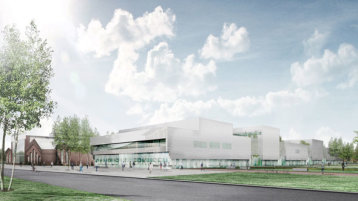
The event will be hosted at TH Köln's Campus Leverkusen, near the city of Cologne.
If you wish to partake, contact Anna Schelling via anna.schelling@th-koeln.de.
April 2026