

Finance and Capital Markets (Bachelor's program) Program Content
Whether it's stocks, bonds, ETFs, options or crypto assets – financial markets determine how companies raise capital, under what conditions banks grant loans, how investors build wealth, and how funded pension schemes develop. Do you want to not only understand but actively shape them? Then the B.Sc. Finance and Capital Markets is the right choice for you!
What you can expect
You dive deep into financial data, models, and technologies to truly understand the mechanisms of capital markets. Combining capital market theory, quantitative methods, and modern technology enables you to make well-informed decisions. To this end, you learn modern tools such as Python and SQL, which allow you to apply theoretical models in practice. Current topics like blockchain technology and crypto assets are also part of the curriculum – you explore how digital currencies, tokenization, and DeFi are transforming investment and banking.
During the semester, you typically attend courses in small groups with your fellow students. In the compulsory modules, which are exclusively offered in this program, there are initially about 40 participants; in the elective specialization modules, group sizes range from 10 to 20 participants. We support you from the very beginning – so that you not only succeed in your studies but also gain the confidence to help shape the financial markets of tomorrow. Theory meets practice
Our curriculum is aligned with the international standard of the Chartered Financial Analyst (CFA®) Program*. Through case studies, simulations, and practical projects, you apply your knowledge directly and prepare yourself for the realities of the financial sector.
A dedicated research course introduces you to academic work and how to work with AI. Through term papers and presentations, you gradually build your competencies – concluding your studies with an independent Bachelor’s thesis.
Throughout all this, we support you with a variety of learning opportunities from the start. Before the semester begins, you have access to a mathematics bridging course to ensure you have the essential fundamentals. Additionally, we offer free digital supplemental resources that allow you to familiarize yourself with mathematics, Python, and more even before the semester starts, if you wish.
What we expect from you
With the right attitude and commitment, you will not only grow professionally but also personally beyond your own expectations. If you are ready to engage intensively with capital markets, you will find the perfect environment here. We expect a high level of dedication, curiosity, and the ability to grasp complex interrelationships.
Curriculum Structure
Our Finance and Capital Markets (B.Sc.) program is clearly structured yet flexible: from the fundamentals in the first semesters to specialization in the later semesters, the content builds systematically upon itself. In the first four semesters, the focus is on strengthening your basics. You will acquire solid knowledge in business administration, economics, IT, and quantitative methods, with a clear emphasis on financial topics from the very beginning. In the following fifth and sixth semesters, you deepen and specialize your expertise. You will focus on areas such as asset management, banking, financial innovations, or quantitative methods, and also learn about the ethical, legal, and regulatory aspects of finance.
Interactive Degree Programme Overview – Compulsory and Electiv Modules
Privacy Notice: By clicking on the link, you will leave the website of TH Köln and be redirected to the platform "Flourish". This provider may process your IP address and other usage data. Please refer to the privacy policy of "Flourish", which you can find on their website.
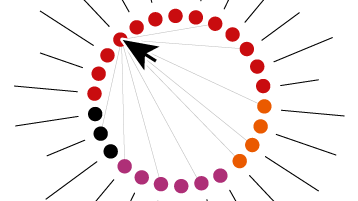
To help you quickly understand how the modules build on each other and what options you have, we have illustrated the connections in an overview graphic. The graphic shows you:
 Module Grafik
(Image: TH_Köln)
Module Grafik
(Image: TH_Köln)
- All compulsory and elective modules of the program
- Dependencies and prerequisites between the modules
- Possible specializations in the higher semesters
- This way, you can optimally plan your individual study path and understand how the individual modules complement each other in terms of content.
Detailed information on all modules can be found in our module handbook.
*CFA® is a registered trademark owned by the CFA Institute. This program is not affiliated with, sponsored, or approved by CFA Institute. The CFA Institute is the administrator of the CFA Program and grantor of the CFA designation.