

Tropical Ecology Conference in Passau: Researchers present the REPLÂNTICA training programme
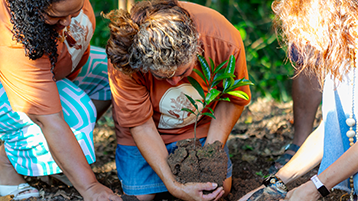
How can tropical forests be successfully restored in the long term? This is the question addressed by the REPLÂNTICA project run by the Institute for Natural Resources Technology and Management (ITT). At the European Conference of Tropical Ecology 2026 in Passau, project participants presented their approaches and initial results in a dedicated session.
“Against the backdrop of global climate change and biodiversity loss, the restoration of tropical forests holds great potential: it promotes the preservation of biological diversity, limits the impacts of climate change, reduces disaster risks, and ensures the provision of vital ecosystem services,” says Prof. Dr Udo Nehren, Director of the ITT. However, many restoration projects fail – for example, because local actors are not sufficiently involved or because experience from successful projects is not adequately shared.
To raise awareness of proven approaches, Nehren and other project participants presented their work in the REPLÂNTICA project at this year's European Conference on Tropical Ecology, where 233 participants explored various topics related to ‘Species-Ecosystems-People’ in 19 sessions.
In the session entitled ‘How to make forest restoration work: exploring innovative approaches and success factors’, led by Dr Claudia Raedig and Prof. Dr Udo Nehren (both ITT), the first six speakers reported on the experiences of the partners in the REPLÂNTICA project. In this project, ITT is working with the Brazilian environmental organisation Reserva Ecológica de Guapiaçu (REGUA) and with the Federal Rural University of Rio de Janeiro as associated partner to develop and implement practical training courses for different target groups in the Guapiaçu river basin in the state of Rio de Janeiro. The aim of the project is to support local actors – such as landowners and the local population – in implementing reforestation measures themselves.
Gallery
 0 / 0
0 / 0
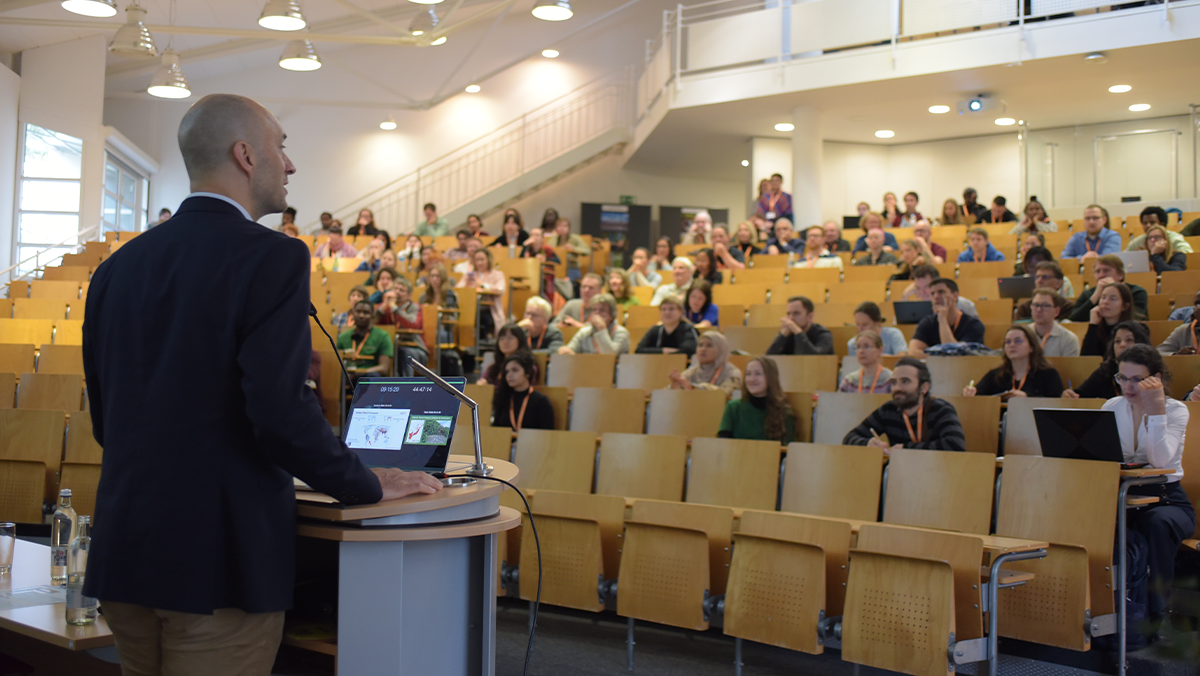
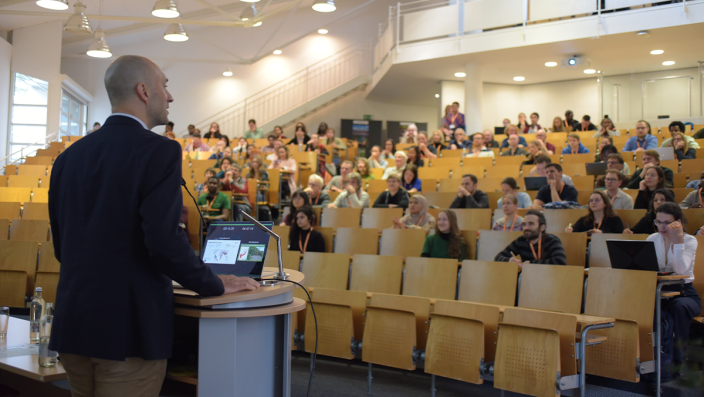
The conference began with a keynote lecture by Alexandre Antonelli, Professor of Biodiversity and Systematics at the University of Gothenburg in Sweden and Scientific Director of the Royal Botanic Gardens, Kew. His talk highlighted a “dark spot” in the Atlantic Coastal Rainforest in eastern Brazil. (Bild: Ina Voshage) (Image: Ina Voshage)
 0 / 0
0 / 0
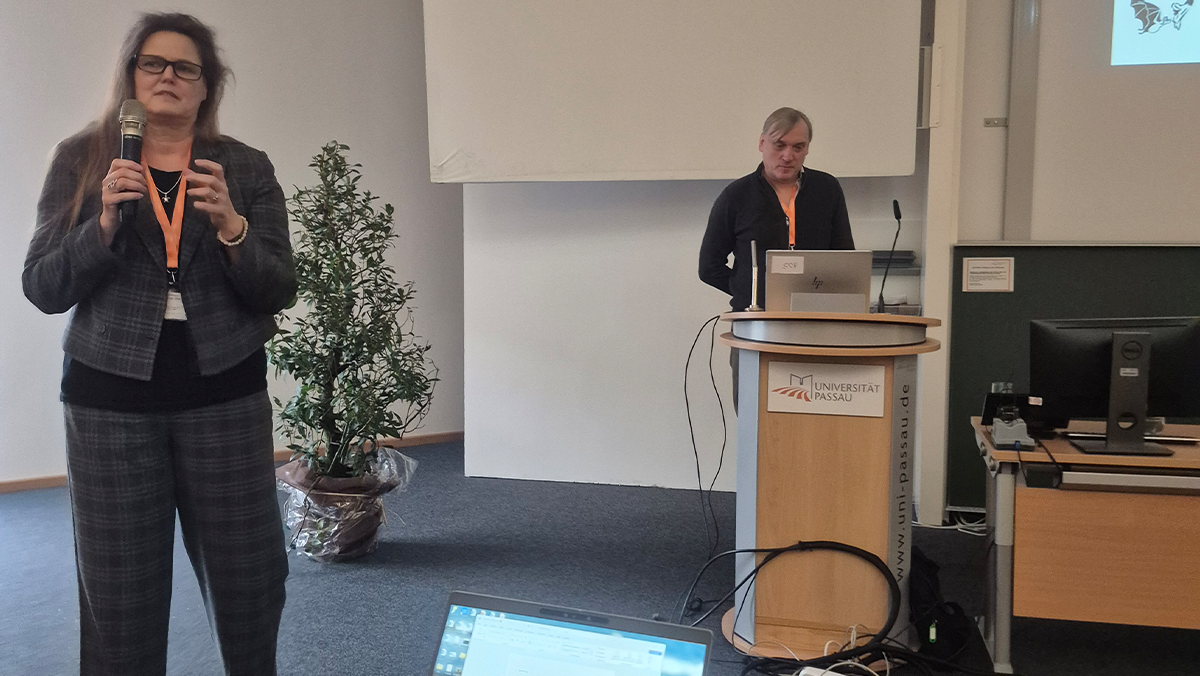
Following the keynote, the focus remained on the Atlantic Coastal Rainforest—the Mata Atlântica—exploring how the reforestation of degraded areas could be successfully implemented. Claudia Raedig, who researches and teaches in the field of Biodiversity Protection and Connectivity, and Udo Nehren, Professor of Ecosystem Management—both at TH Köln—led the session. In total, eleven experts from academia and practice presented innovative approaches to forest restoration. (Bild: Luíza Zanonato) (Image: Luíza Zanonato)
 0 / 0
0 / 0
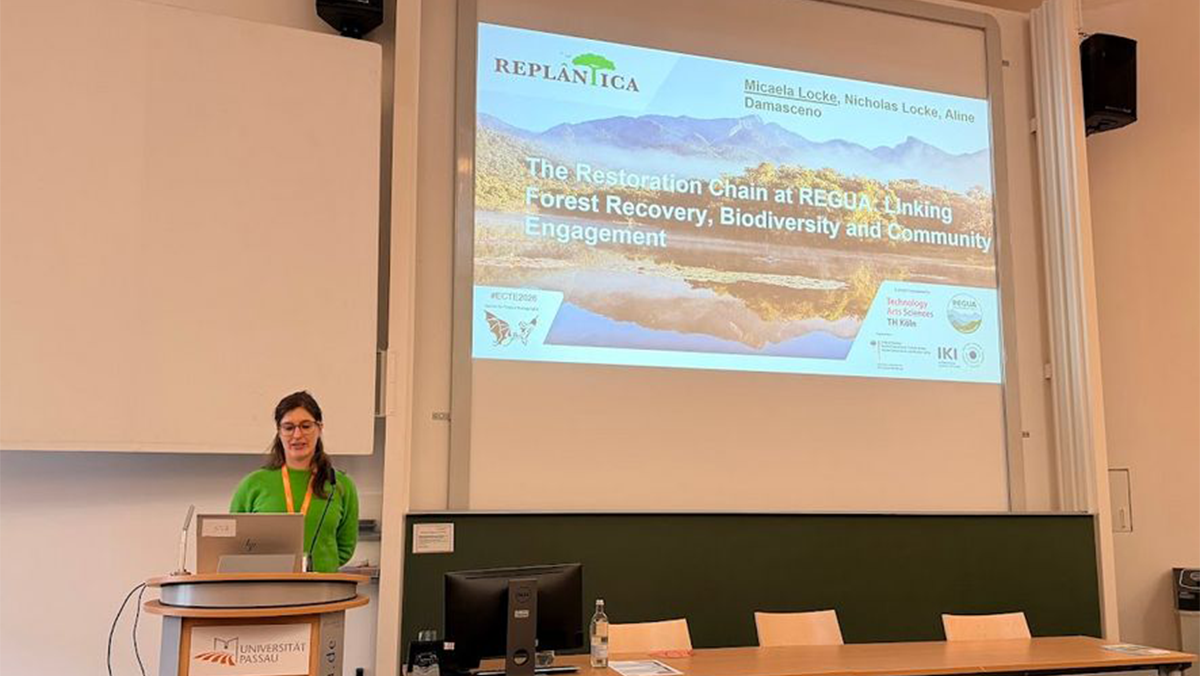
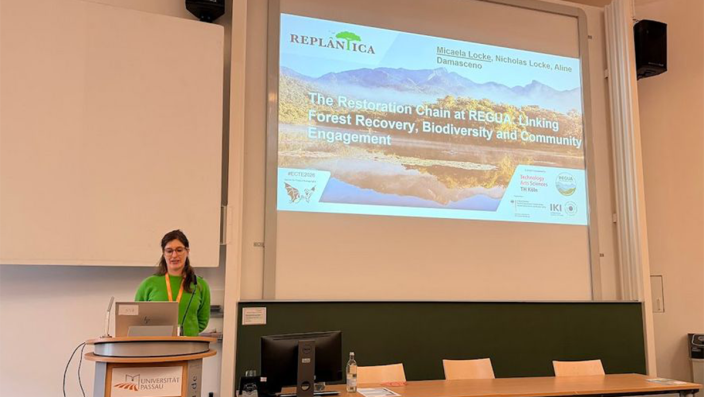
Micaela Locke, environmental scientist and research director at the Guapiaçu Ecological Reserve (REGUA), presented the five-step approach that has led to successful reforestation in the Guapi-Macacu watershed. (Bild: Luíza Zanonato) (Image: Luíza Zanonato)
 0 / 0
0 / 0
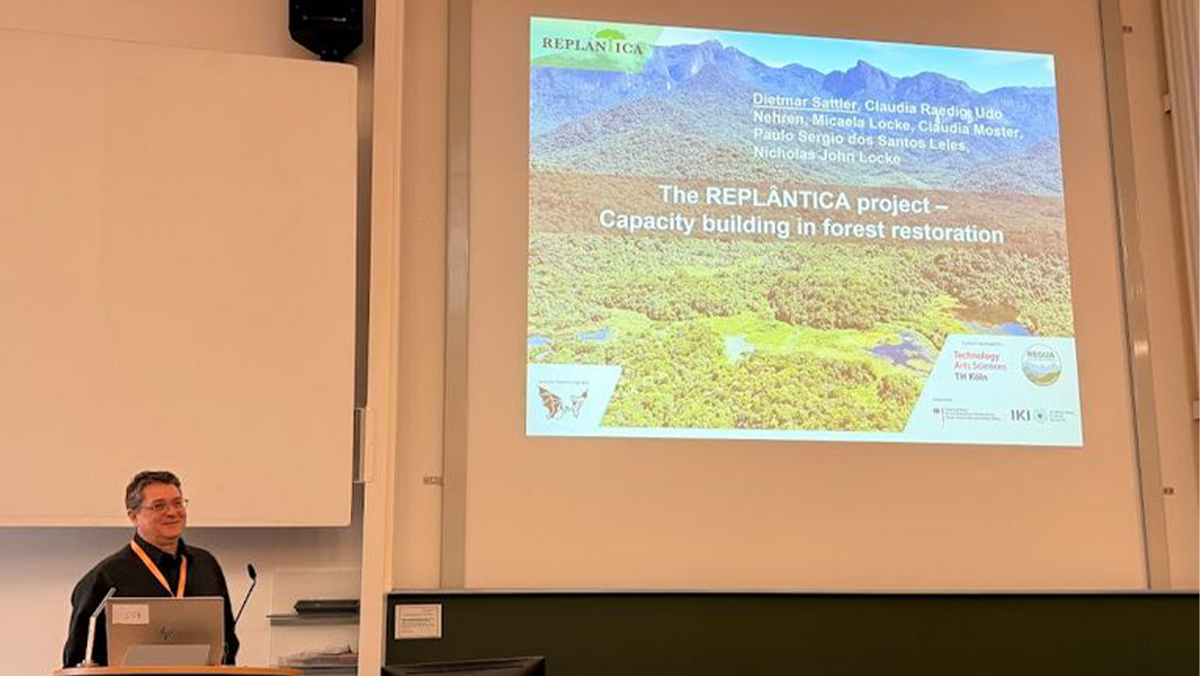
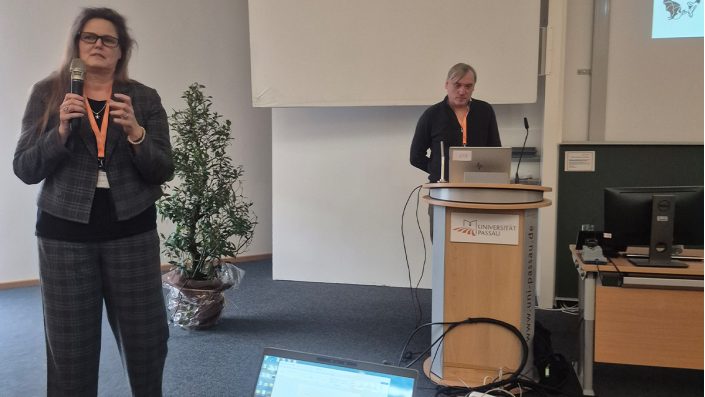
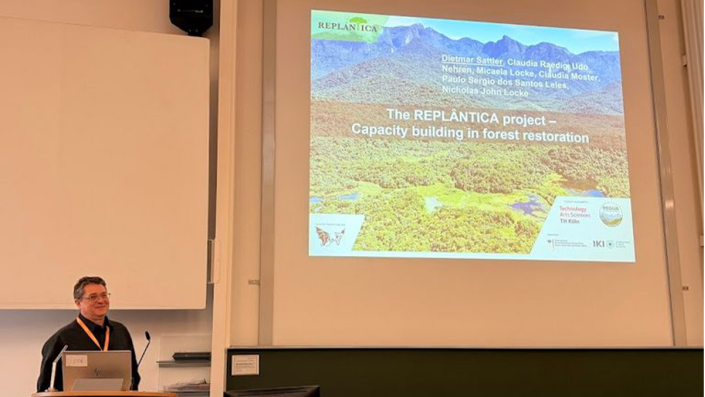
REGUA and TH Köln collaborate within the REPLÂNTICA project to share ecological restoration expertise with six key target groups through training that combined scientific knowledge with practical application. Dietmar Sattler, PhD in Botany and Ecology and scientific advisor to the REPLÂNTICA project, presented the key elements behind the success of the training program. (Bild: Luíza Zanonato) (Image: Luíza Zanonato)
 0 / 0
0 / 0
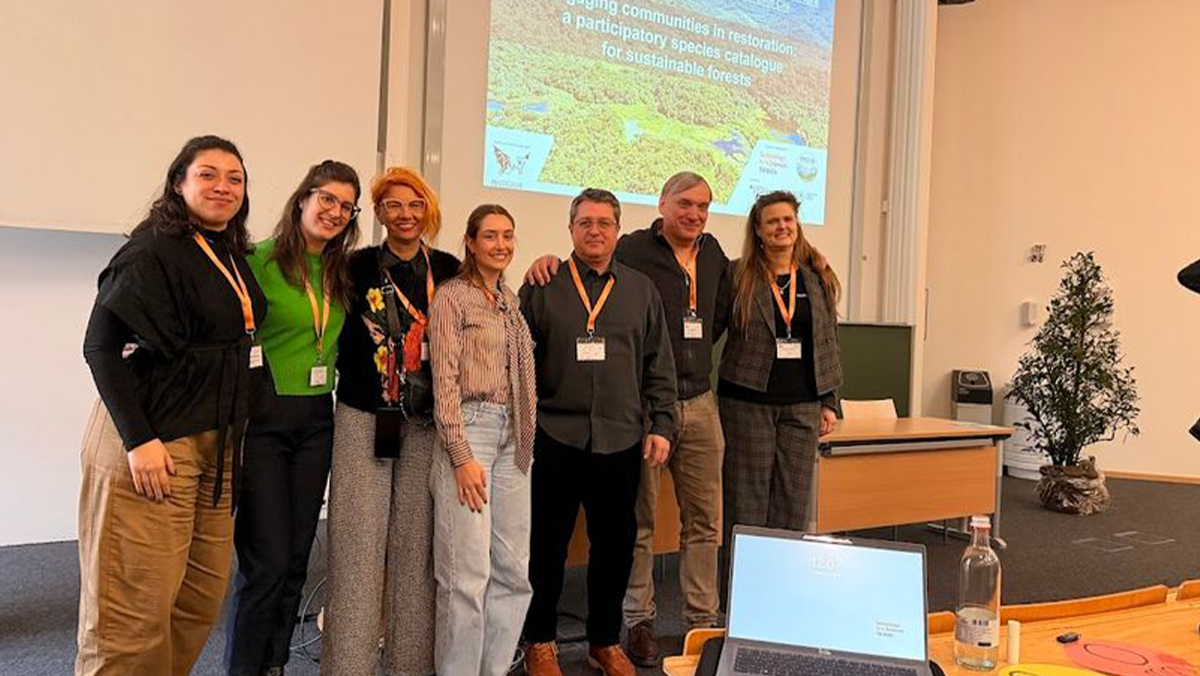
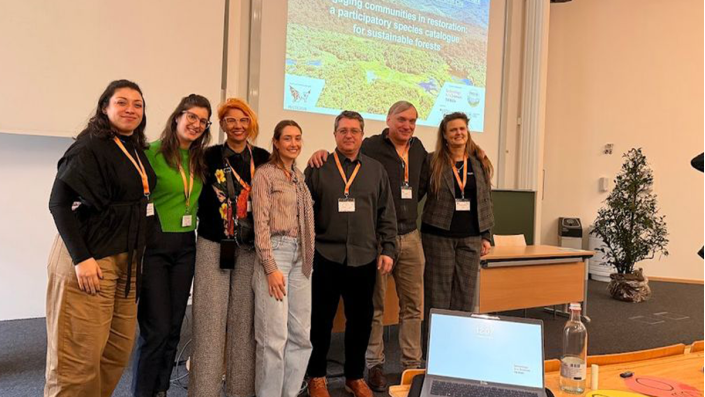
(from left to right): Emma Tamez Montero, Master’s student at the Autonomous University of San Luis Potosí (Mexico) and TH Köln; Micaele Locke (REGUA, Brazil, project coordinator of the REPLÂNTICA project); Fatima Pina-Rodrigues (Federal University of São Carlos, Brazil); Luíza Zanonato, Master’s student at TH Köln and sustainability specialist at Miltenyi Biotec, Bergisch Gladbach; Dietmar Sattler (scientific advisor of the REPLÂNTICA project); Udo Nehren (project lead of the REPLÂNTICA project); and Claudia Raedig (project coordinator of the REPLÂNTICA project). (Bild: Augusto Piratelli) (Image: Augusto Piratelli)
 0 / 0
0 / 0
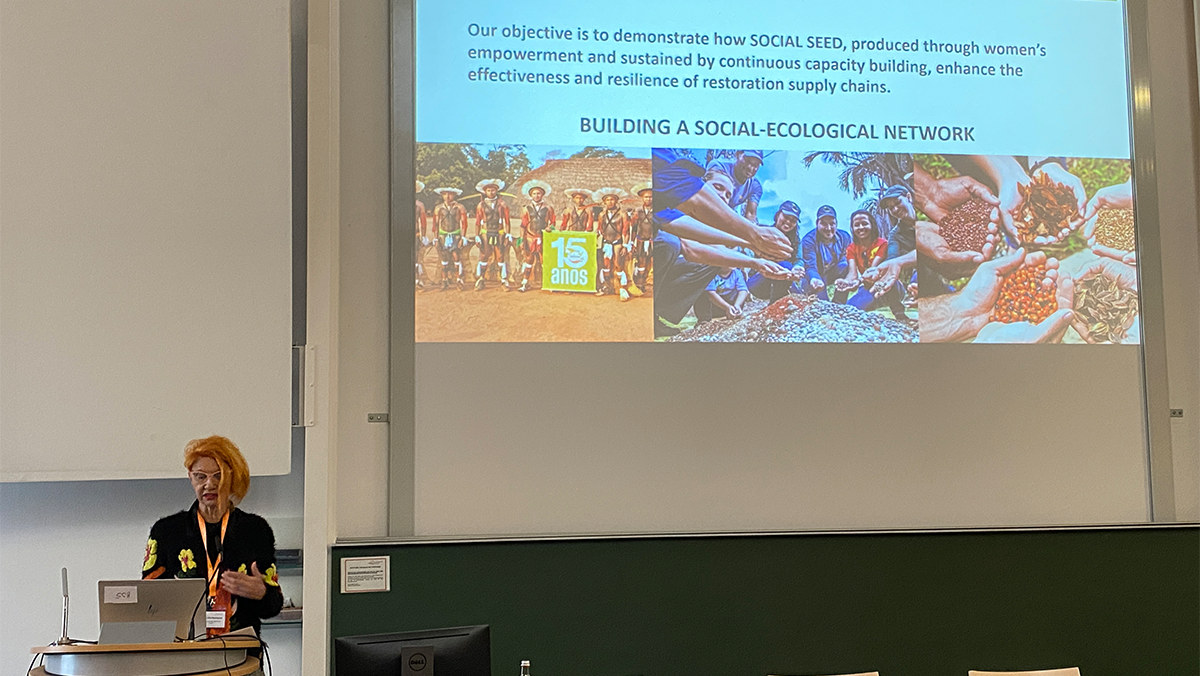
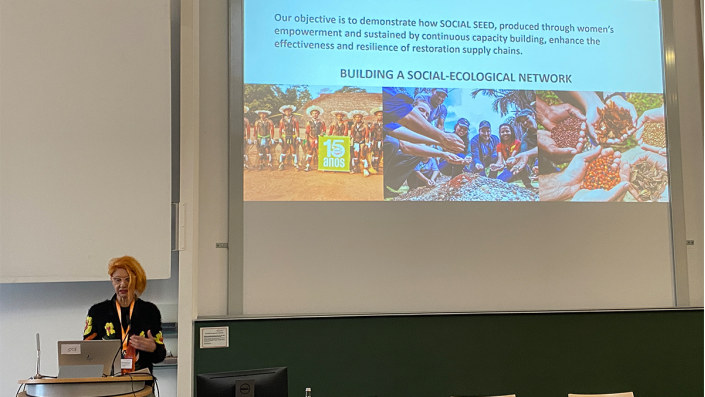
The second part of the session began with a presentation on strengthening the role of women in the Amazon and the Mata Atlântica. Fatima Pina-Rodrigues, Professor of Silviculture at the Federal University of São Carlos, Brazil, and founder of the Network for the Cultivation of Tropical Seeds and Seedlings (REMAS), illustrated through powerful images how the creation of seed networks has helped empower indigenous women and women in rural areas across Brazil. (Bild: Luíza Zanonato) (Image: Luíza Zanonato)
Approaches for successful forest restoration
In the first part of the session, researchers and partners from the field presented various aspects of the project. Project manager Nehren opened with an overview of the ecological challenges facing Brazil's species-rich and endangered Atlantic Forest. MSc. Micaela Locke, head of research at REGUA and project manager on the Brazilian side, then presented the organisation's reforestation approach. REGUA has been working to restore degraded areas for more than 20 years – around 700 hectares of forest have been restored to date.
Dr Dietmar Sattler, scientific advisor to the project, demonstrated how this knowledge can be passed on. He explained the concept behind the REPLÂNTICA project and how the various target groups receive tailored training. Emma Tamez Montero, a master's student in the dual master's programme ‘Environment and Resources Management’ at the Universidad Autónoma de San Luis Potosí and the TH Köln, presented a study on the prioritisation of areas for forest restoration in the Guapi-Macacu catchment area.
Luíza Zanonato, a master's student in the Natural Resources Management and Development programme, examined in her thesis how companies in the river basin can contribute to reforestation through their commitment to biodiversity and ecosystem services. The morning session concluded with Claudia Raedig, project coordinator on the German side, who presented a participatory approach to developing a species catalogue for local forest restoration, in which landowners are actively involved. In the afternoon, further presentations followed, introducing innovative approaches to forest restoration from Brazil, Hawaii, Mauritius and the Ethiopian mountain forests.
In addition, the REPLÂNTICA team was also represented at the conference with a poster: MSc. Rodrigo Vieira Bogéa Soares, a graduate of ITT, presented his development approach for taking into account the learning needs of stakeholders as a basis for tailor-made training courses.
About the REPLÂNTICA project
The transfer project ‘Capacity building for forest restoration: protecting biodiversity and climate in the Mata Atlântica’ (‘REPLÂNTICA’) is led by Prof. Dr. Udo Nehren from the Institute for Technology and Resource Management in the Tropics and Subtropics and coordinated on the German side by Dr. Claudia Raedig (both ITT). The project partner is the local environmental organisation Reserva Ecológica de Guapiaçu (REGUA). On the Brazilian side, the project is led by Nicholas Locke and coordinated by Micaela Locke (both REGUA).
The project, which is funded with €800,000 by the IKI Medium Grants programme of the International Climate Initiative (IKI), will run until December 2026. Since 2020, the IKI has been promoting North-South cooperation that, together with local civil society actors, makes innovative contributions to the implementation of the Paris Agreement on climate change and the Convention on Biological Diversity. The IKI is the responsibility of the Federal Ministry for the Environment, Climate Protection, Nature Conservation and Nuclear Safety.
March 2026