Ideas, exchange, the future: ChemCologne Cooperation Day at the Leverkusen Campus
Innovation through networking – at the ChemCologne Cooperation Day 2026, the Leverkusen Campus was transformed into a meeting place for stakeholders from the worlds of academia, the chemical industry and the start-up scene. More than 120 participants came together to exchange experiences, provide inspiration and discuss new ideas for the chemical industry.
The event, held under the theme “Future-Crafted Chemistry – Where Industry Meets Innovation”, kicked off with a talk by Prof. Dr Birgit Glüsen, Vice-Dean for Research and Knowledge Transfer at the Faculty of Applied Natural Sciences, and Christoph Kappenhagen, Chairman of the Board of ChemCologne and Managing Director of Yncoris GmbH & Co. KG. “I’m looking forward to the discussions at our PhD students’ research poster sessions and to the pitches, which will help bring an even stronger start-up vibe to this faculty,” said Prof. Dr Birgit Glüsen as she welcomed the guests.
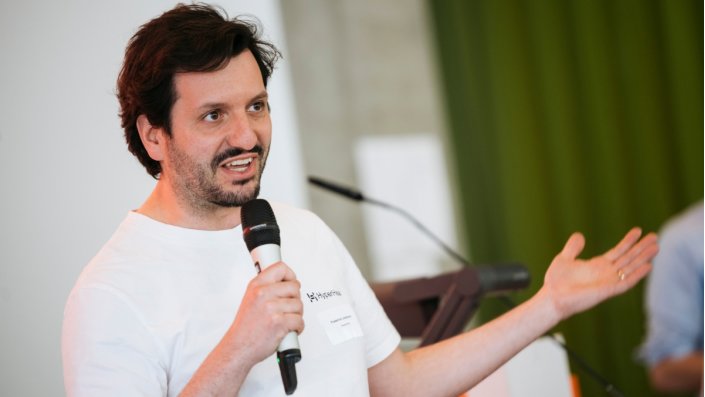
This was followed by the main event of the Cooperation Day: during a pitch session, the start-ups findIQ, Mycolever, HyperHeat, naion.tech and Sybilion presented their innovative business ideas for shaping a sustainable chemical industry. The audience chose Frederick Lessmann from HyperHeat as the winner for his presentation on ‘Hybrid electrification: the fastest route to decarbonised process heat’. The start-up combines innovative materials, smart technology and renewable energy to offer cost-effective, zero-emission high-temperature heating solutions.
The ChemCologne Cooperation Day 2026 in pictures
 0 / 0
0 / 0
Opening talk with Prof. Dr Birgit Glüsen and Christoph Kappenhagen (Image: ChemCologne)
 0 / 0
0 / 0
Pitch session with Frederick Lessmann, founder of HyperHeat. (Image: ChemCologne)
 0 / 0
0 / 0
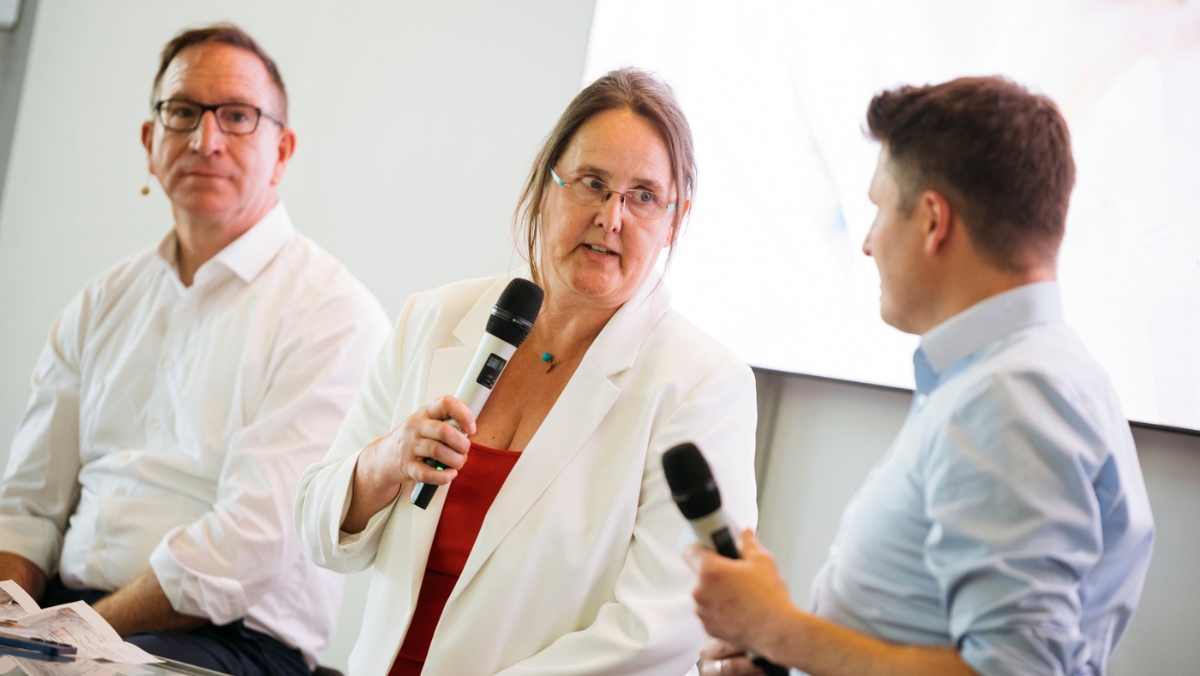
Panel discussion with Tilman Spitz (goatAM GmbH), Dr Stephanie Grubenbecher (Gateway TH Cologne) and Sebastian Hanny-Busch (NRW.Bank). (Image: ChemCologne)
 0 / 0
0 / 0
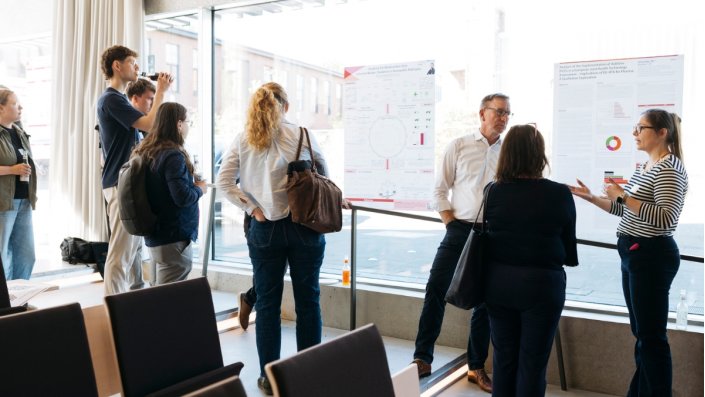
PhD students from the Faculty of Applied Natural Sciences present their research. (Image: ChemCologne)
 0 / 0
0 / 0
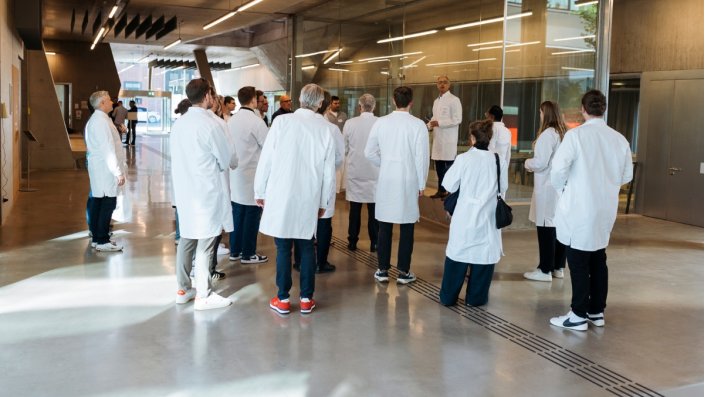
Prof. Dr Dirk Burdinski gives interested visitors a tour of the campus and the laboratories. (Image: ChemCologne)
 0 / 0
0 / 0
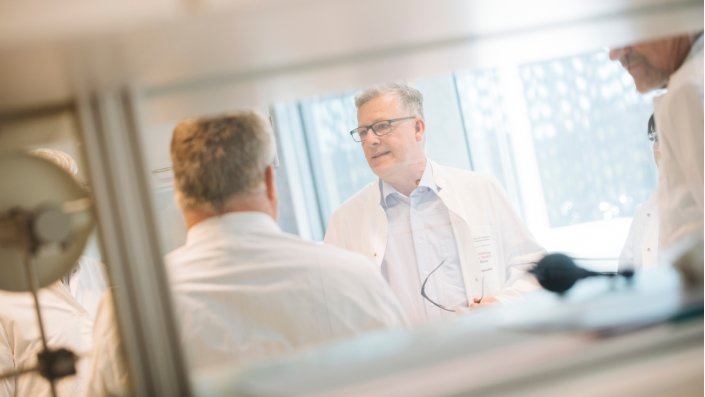
Prof. Dr Matthias Hochgürtel chatting with the guests. (Image: ChemCologne)
 0 / 0
0 / 0
Prof. Dr Ulrich Schören presents the ‘Aufbruch’ postgraduate cluster. (Image: ChemCologne)
 0 / 0
0 / 0
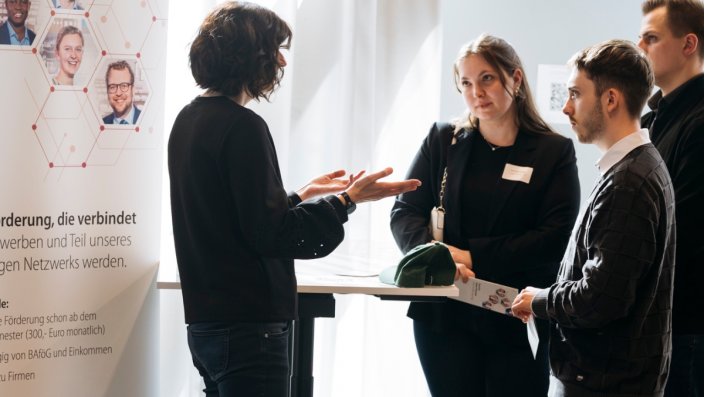
Visitors to the Partnership Day find out about the Germany Scholarship. (Image: ChemCologne)
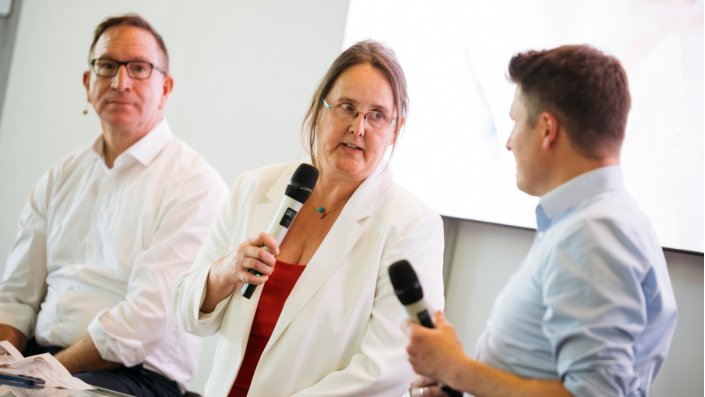
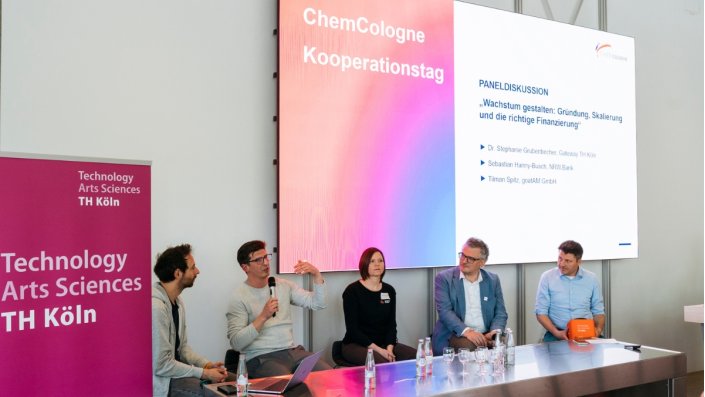
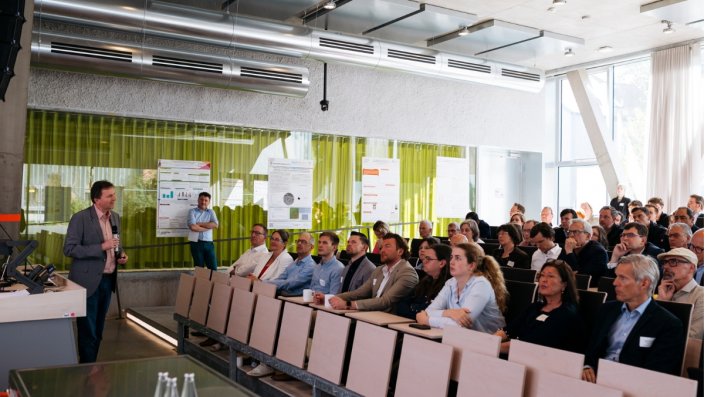
How can growth and innovation be fostered through start-ups, scaling up and the right financing? This question was the focus of the subsequent panel discussion featuring founder Tilman Spitz (goatAM GmbH), Dr Stephanie Grubenbecher (Head of Gateway TH Köln) and Sebastian Hanny-Busch (authorised signatory at NRW.Bank). Louisa Bock (Bayer AG) provided further inspiration with a presentation on ‘Future Skills’, in which she discussed key competencies for the working world of tomorrow and offered insights into Bayer’s training practices.
Prof. Dr Ulrich Schörken highlighted the transformative power of scientific research, using the example of the ‘Aufbruch’ Graduate Research Cluster, a flagship project for structural change in the Rhineland mining region. Through their research projects, 37 PhD students are exploring new value-creation pathways for the region’s chemical and manufacturing industries. From the Faculty of Applied Natural Sciences, PhD students Eugen Banmann, Leonie Hoff and Melanie Schulz, along with their supervisors Prof. Dr Ulrich Schörken, Prof. Dr Stéphan Barbe and Prof. Dr Matthias Eisenacher, are involved in the project.
The programme during the break also offered a wide range of activities: as well as a poster exhibition showcasing the doctoral students’ research projects, guests were able to explore the campus on a guided tour. They also had the opportunity to find out more about the Deutschlandstipendium and the Gateway programme.
For students, the event was a valuable opportunity to network with representatives from industry and to gain an insight into the practical relevance of current research. They were able to see how PhD students present their work and how their findings are put into practice in industry. Young professionals also took the opportunity to find out about part-time Master’s programmes as part of their lifelong learning and to explore the faculty’s laboratories.
The ChemCologne Cooperation Day is organised annually by ChemCologne in collaboration with a university. This year’s Cooperation Day was supported by NRW.BANK, chemstars and the Young Chemists’ Forum (JCF) of the German Chemical Society (GDCh) in Cologne-Leverkusen.
July 2026