


COIL in Practice: Intercultural Learning through International Negotiation Projects

A COIL project on “International Negotiation” brought together students from TH Köln and international partners. Insights were shared during the COIL Lunch highlights. Prof. Dr. Elke Schuch presented outcomes, challenges, and lessons for digital international teaching.
Collaborative Online International Learning (COIL) has become an increasingly relevant approach to internationalising higher education through digitally connected teaching and learning formats. By enabling structured collaboration between students and lecturers across countries, COIL creates shared virtual learning environments that foster both academic and intercultural exchange.
A recent COIL project titled “International Negotiation” connected students and lecturers from TH Köln, Avans University of Applied Sciences, Miranda House University of Delhi, and Berlin Business & Law School in a joint international teaching and learning setting.
The project was presented as part of the COIL Lunch series, where Prof. Dr. Elke Schuch shared insights into the planning, design, implementation, and outcomes of her COIL project. The COIL Brown Bag Lunches, organised by the COIL Competence Center of TH Köln’s Center for Academic Development (ZLE), are held regularly online and provide a platform for exchange and networking among TH Köln lecturers interested in internationalisation.
Video recording of the presentation
Conducted during the winter semester 2025/26 and coordinated by Avans University of Applied Sciences, a partner institution within the PIONEER Alliance, the COIL involved around 180 students from all participating universities, including 25 students from TH Köln’s Bachelor’s program “Translation and Multilingual Communication”. At TH Köln, the project was embedded in an English-language course and constituted a graded course assignment, enabling students to engage in particularly intensive and practice-oriented learning.
Students worked in international teams on tasks related to intercultural communication, international negotiation practices, and audiovisual production. They conducted interviews with international managers from the business sector, analysed culture-specific business behaviour, and combined theoretical perspectives with practice-oriented project work.
The collaborative structure enabled direct interaction between students from different academic and cultural backgrounds. Feedback from the course indicated that the international and practice-oriented format was very well received and had a positive impact on student motivation and engagement. Participants described the COIL as “highly rewarding,” particularly in terms of teamwork, organisational skills, intercultural communication competencies, and insights into international negotiation practices.
At the same time, the implementation revealed challenges typical of international teaching formats. Coordination across different time zones, varying academic calendars, and differing institutional expectations required continuous communication and alignment. In addition, the project's two-week duration placed considerable demands on students. Within this limited timeframe, they had to communicate with external business partners, organise interviews, and produce a three-minute video.
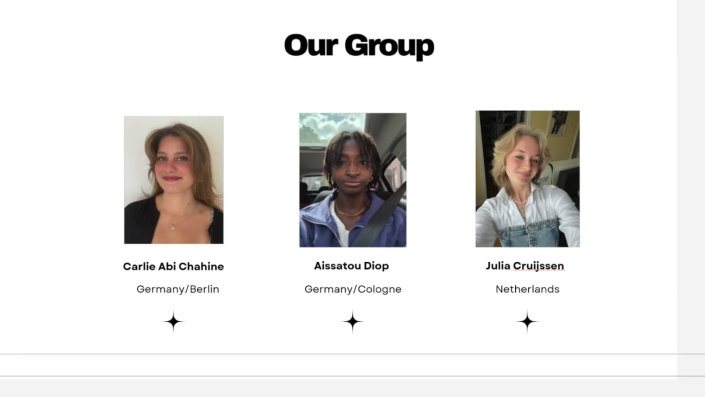
Students presenting their final project video
Möchten Sie YouTube aktivieren, lesen Sie bitte zunächst die Datenschutzhinweise der TH Köln. Wenn Sie diese gelesen haben und einverstanden sind,  klicken Sie hier.
For the next iteration of this successful teaching collaboration within the PIONEER Alliance, Prof. Dr. Elke Schuch plans to work with a smaller overall group and fewer participating institutions. She also intends to allow students more time to complete the project tasks.
June 2026