
Dr. Sung Un Gang
Dr. phil.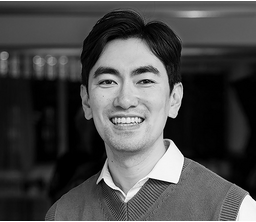
Standort Mülheim
Schanzenstraße 28
51063 Köln
Mailing address
 +49 221-8275-5839
 sungun.gang@th-koeln.de
Positions
- Research Associate on the DFG Research Impulse "Cultural Memory in Crisis"
Responsibilities
- Research, teaching, and project management
Research fields
-
Cultural Studies, Cultural Memory, Queer Spaces, Digital Media, Post-Migration
Projects / Cooperations
-
Smart People: Queer Everyday Life in Digitalized Spaces (CRC 1265, subproject B03)To project website
How do queer residents of Seoul negotiate their everyday spaces, and what role does digital communication play in this process? How can spatial conflicts involving queer people shape broader processes of social transformation? Guided by these questions, I conducted ethnographic fieldwork between 2022 and 2025 in queer neighborhoods and nightlife districts in Seoul (Jongno, Itaewon, Hongdae) as well as at the Seoul Queer Culture Festival 2022, complemented by in-depth interviews with LGBTQIA+ residents. Together with Martina Löw, Jörg Stollmann, and Ara Song, I identified the flexible operation of threshold spaces as one of the central spatial practices of Seoul's queer residents — practices through which they claim their place in a densely populated and highly digitalized city (Gang et al. 2025). Furthermore, "queer placelessness" emerged as a shared yet intersectionally shaped everyday experience (Gang 2026a), which residents attempt to overcome through means such as online gaming (Gang 2026b). The project has so far resulted in four peer-reviewed journal articles and three edited volume contributions. I have presented the findings at, among other venues, the Queer Human Rights Conference at the German Bundestag (2023) and at the Futures Institute of the National Assembly of Korea (2023). -
The Making of Modern Subjects: Public Discourses on Korean Female Spectators in the Early 20th Century (Dissertation)To the Monograph
Theaters and cinemas established themselves as a new form of public space on the Korean peninsula toward the end of the 19th century. People of all social classes, ages, and genders came together there. In doing so, they broke with the conventional strict spatial separation of social groups and set in motion dynamic processes of negotiation around colonial and anti-colonial politics, sexuality, and social order. Women in the audience attracted particular attention. For my dissertation, I analyzed Korean newspapers, magazines, and fiction published from the 1880s through the 1940s, identifying the ever-shifting expectations placed on Korean women in media discourse — as empathetic patriots, assimilated colonial subjects, objects of eugenic marriage politics, and enlightened comrades. At the same time, I showed how theatergoers resisted this often male-dominated, top-down debate and appropriated the new urban space for their own interests and politics: by organizing benefit concerts and cultivating their own fame; by laughing at Japanese dramas promoted as a superior art form; by watching romance films and pursuing their own love stories despite public outrage; and by cheering and applauding loudly over the shushing men when Nora taught her husband a lesson. In this way, theaters and cinemas functioned as sites of a "colonial publicness," in which gray zones emerged that could not be fully attributed to either colonial or anti-colonial politics. The dissertation was supported by a fellowship from the a.r.t.e.s. Graduate School for Humanities Cologne and published open access with transcript Verlag through a publication grant from the Academy of Korean Studies.
Publications
- Gang, Sung Un (2026): Experiences of Placelessness : Rethinking Queer Economies and Everyday Exclusion in South Korea. In: Historical Social Research, Historische Sozialforschung. (peer-reviewed/Open Access)https://bibliografie.th-koeln.de/servlets/DozBibEntryServlet?mode=show&id=bibthk_mods_00016475
- Gang, Sung Un; Löw, Martina; Song, Ara; Stollmann, Jörg (2025): Can You Pass? Thresholds of Queer Cultural Spaces in Seoul. In: Space and Culture. (peer-reviewed)https://doi.org/10.1177/12063312251363066
- Bernroider, Lucie; Born, Anthony Miro; Kulz, Christy; Gang, Sung Un (Hrsg.) (2025): Intersectionality and the City : Exploring Violence and Inequality in Urban Space. London, New York, NY: Routledge (The Refiguration of Space). (Open Access)https://doi.org/10.4324/9781003529729
- Bernroider, Lucie; Born, Anthony Miro; Kulz, Christy; Gang, Sung Un (2025): Introduction : Exploring Urban Violence and Inequality from intersectional Perspectives. In: Bernroider, Lucie; Born, Anthony Miro; Kulz, Christy; Gang, Sung Un (Hrsg.): Intersectionality and the City : Exploring Violence and Inequality in Urban Space. London, New York, NY: Routledge (The Refiguration of Space), S. 1 - 12. (Open Access) https://doi.org/10.4324/9781003529729
https://doi.org/10.4324/9781003529729-1 - Gang, Sung Un (2025): Only a Researcher's Struggle? Reconceiving the Ethnographic Field as a Relational Space. In: Bernroider, Lucie; Born, Anthony Miro; Kulz, Christy; Gang, Sung Un (Hrsg.): Intersectionality and the City : Exploring Violence and Inequality in Urban Space. London, New York, NY: Routledge (The Refiguration of Space), S. 42 - 52. (Open Access) https://doi.org/10.4324/9781003529729
https://doi.org/10.4324/9781003529729-5 - Gang, Sung Un (2025): We Are Everywhere, But Where Are We?. In: Farías, Ignacio; Steets, Silke; Gansterer, Nikolaus (Hrsg.): Atlas of Spatial Figures. Berlin: JOVIS, S. 50 - 51. (Open Access) https://doi.org/10.1515/9783986122218
https://doi.org/10.1515/9783986122218-012 - Gang, Sung Un (2025): Don't Litter on My Parade. In: Farías, Ignacio; Steets, Silke; Gansterer, Nikolaus (Hrsg.): Atlas of Spatial Figures. Berlin: JOVIS, S. 104 - 105. (Open Access) https://doi.org/10.1515/9783986122218
https://doi.org/10.1515/9783986122218-032 - Gang, Sung Un (2024): The Making of Modern Subjects : Public Discourses on Korean Female Spectators in the Early Twentieth Century. Bielefeld: transcript Verlag (Gender, Diversity, and Culture in History and Politics). (Open Access)https://doi.org/10.14361/9783839469293
- Gang, Sung Un; Löw, Martina; Stollmann, Jörg (2024): Verstädterung, Wohneigentum und Raumkonstitution : Räumliche Refiguration in Südkorea zwischen Familialismus und queeren Communities, Urbanization, Residential Property, and the Constitution of Space : Spatial Refiguration in South Korea between Familialism and Queer Communities. In: Berliner Journal für Soziologie. Vol. 34, S. 647 - 672. (peer-reviewed/Open Access)https://doi.org/10.1007/s11609-024-00539-y
- Gang, Sung Un (2023): Liebesfilme, Geschlechtskrankheiten und eugenische Ehe : Diskurse über Seouler Kinobesucherinnen in den 1920er- und -30er-Jahren, Romantic Movies, STDs, and Eugenic Marriage : Discourses about Seoul’s Female Spectators during the 1920s and 1930s. In: Österreichische Zeitschrift für Soziologie : Vierteljahreszeitschrift der Österreichischen Gesellschaft für Soziologie. Vol. 48, S. 221 - 242. (peer-reviewed/Open Access)https://doi.org/10.1007/s11614-023-00536-0
- Gang, Sung Un (2021): From Streets to Theaters : The Emergence of the Korean Entertainment Business in the Early 20th Century. In: Yukawa, Shirō; Meyer, Harald; Bachem, Nadeschda (Hrsg.): Ostasien im Blick : Festschrift zum 60. Geburtstag von Reinhard Zöllner. Großheirath: Ostasien Verlag (Orientierungen / Themenband), S. 145 - 166.
Talks
-
Can you pass? Thresholds of Queer Cultural Spaces in Seoul
Gastvortrag im koreanistischen Masterprogramm, University of British Columbia
Mar 2026 -
Undoing the Male Order in Late Industrial South Korea: Monstrous Femininity and Transgender-Coded Subtext in M (1994).
Association for Asian Studies Annual Conference, Vancouver, Canada
Mar 2026 -
LGBTQ+ Youth and Space in South Korea. Exploring Queer Identity through Online Gaming
Gastvortrag in Korean Studies, University of Edinburgh
Feb 2026 -
The Utopia of Male Homosexuality in Contemporary Korean Fictions: Focusing on Park Sang-Young’s Novel I Want To Be One-Dimensional and Saebyŏk ŭi mihak’s BL Fiction Only Kind to Me
2nd International Conference for Contemporary Korean Studies, Seoul National University
Aug 2025 -
Stranger Sociality and Digital Intimacy: Exploring LGBTQIA+ Communication in Korea
32nd Association for Korean Studies in Europe Conference, University of Edinburgh
Jun 2025 -
Then I chose to play Confucian Boy: Korean Queer Individuals Exploring Identity in Digital Spaces
Conference “Diversity in/and Korea”, Goethe-Universität Frankfurt am Main
Jun 2025 -
Die Homöostase des Feldes und das ethnografische Ich: Eine Reflexion aus der Feldforschung zu queeren Alltagsräumen in Seoul
Frühjahrskonferenz der DGS-Sektion Soziologische Theorie, Goethe-Universität Frankfurt am Main
May 2025 -
Exploring Korean Women’s Intersectional Spectatorship: A Cultural History of Colonial Everyday Life in the Early Twentieth Century
Gastvortrag am AOI Center for Korean Studies, Universität Tübingen
Dec 2024 -
Exploring Korean Women’s Intersectional Spectatorship
Gastvortrag am Yun Dong-Ju Centre, Foreigners‘ University Siena
Nov 2024 -
Conflict Prevention and Queer Placelessness: An Intersectional Analysis of LGBTQIA+ Lives
CRC 1265 Annual Conference “Conflicts in Space – Spatial Conflicts”, Technische Universität Berlin
Oct 2024 -
The Making of Modern Subjects: Public Discourses on Korean Female Spectators in the Early 20th Century (Dissertation)
Guest lecture at the Korean Literature Research Group Sanghurlang (online)
Oct 2024 -
Rediscovering Audience Publicness: Korean Female Spectators and the Challenges of Postcolonial Theater Historiography
Guest lecture at the Institute for Korean Studies, Ohio State University (online)
Oct 2024 -
The Sense of Placelessness: Analyzing Intersectional Marginalization of Seoul’s Queer Inhabitants
IGU Conference “Feminist and Queer Spatialities”, University College Dublin
Aug 2024 -
Queer Refiguration of Spaces: Exploring LGBTQIA+ Everyday Lives in Seoul
Guest lecture at the symposium "Queering Asia: Doing Field Research on Lives in the South Korean and Taiwanese Queer Community," Universität Tübingen
Jul 2024 -
Exploring Age-Based Conflicts in South Korean Queer Communities: A Sociocultural Analysis
Conference “Marginality, Inclusion, and Gender in Korea: Past and Present”, University of Málaga
Mar 2024 -
We Are Everywhere. But Where Are We? Exploring Queer Everyday Space in Seoul
Global Solidarity Lecture Series, Virtual NYI #8. Organized by NYI Global Institute of Cultural, Cognitive, and Linguistic Studies (online)
Jan 2024 -
Extracurricular: Queer Korean Youth and Their Experiences of Studying Abroad
6th Social Sciences Korean Studies in Europe (SoKEN) Conference “Korean Youth Abroad”, Goethe-Universität Frankfurt am Main
Nov 2023 -
Der Stand der Menschenrechte queerer Menschen in Südkorea
Panelist at the Queer Political Human Rights' Conference at the German Bundestag (AG Queer, SPD-Bundestagsfraktion)
Sep 2023 -
Surviving the Coming of Age: Exploring Queer Life Stories through Oral History Interviews
Conference “Korean Youth Spaces, Ecologies and Technologies”, University of Edinburgh
Jun 2023 -
What Makes Queer Spaces Queer?
Workshop “Quality of Space: Different Meanings—Conflicts and Solidarity”, CRC 1265, Technische Universität Berlin.
Jun 2023 -
Queer People as Emerging Citizens of Seoul: Challenges of Everyday Life and Visions of the Future
Guest lecture at the National Assembly Futures Institute, Seoul
Mar 2023 -
Spaces between Display and Discretion: Politics of Queer Everyday Life in Seoul
Gastvortrag im Workshop "Das Andere der Stadt" mit Martina Löw und Jörg Stollmann, University of Seoul
Mar 2023 -
Spectatorship, Audience Publicness und die koreanischen Zuschauerinnen des frühen 20. Jahrhunderts
10. Konferenz der Vereinigung für Koreastudien (VfK), Duisburg.
Oct 2022 -
Meine Familie(n). Wann bin ich koreanisch genug?
Keynote address on heteronormativity and national identity in South Korea at KADAY – Annual Conference of Korean Adoptees in Germany, Bonn
Sep 2022 -
COVID-19 and Challenges of the Asian Communities: A Case Study on Online Activism on the German-Speaking Internet
International Conference “The Living, Caring, and Networking of Diaspora in the Age of Uncertainty”, Chonnam University (online)
Nov 2021 -
From Concert Halls to Streets: Tracing the K-Pop Fans’ Histories of Political Engagement
9. Konferenz der Vereinigung für Koreastudien (VfK), Universität Hamburg (online)
Oct 2021 -
K-Pop: Koreas Soft Power und Wirtschaftsfaktor
Guest lecture at the Korea Business Day (Frankfurt Chamber of Commerce and Industry, online)
Jun 2021 -
From the Ugly Duckling to the Golden Goose: Yu Kil-chun’s Rediscovery of Play (Sandaehŭi) as a Profit-Making Business for the State
Conference “Korean Intellectuals In Between”, Ruhr-Universität Bochum
Jun 2019 -
Cinema Kiss: Challenges of Western Romantic Films in Colonial Korea
8. Konferenz der Vereinigung für Koreastudien (VfK), Universität Frankfurt am Main
Nov 2018 -
The Infectious Love: Female Students’ Theatergoing and Their Role in Eugenic Marriage in Colonial Korea
International Federation for Theater Research (IFTR) World Congress “Theatre and Migration”, Belgrade
Jul 2018 -
Between Spectator and Spectacle: Transformations of Women’s Spectatorship during the Chosŏn Dynasty (1392–1897)
AHRC DTP Conference “Tradition and Transformation”, University of Cambridge
Sep 2017 -
Making Home and Theatre: The Female Audience and Their Husbands in Colonial Korea
3rd Workshop of the European Forum on Korean-Japanese History “Gender(ed) Histories of Korea and Japan”, University of Tübingen
Sep 2017 -
From an Imperial Tool to Space of Engendered Nation Building: Theatres in Colonial Korea (1910–1945)
4th GRAINES Summer School, Universität zu Köln
Jun 2016 -
The Test of Love: Imagination and Representation of Korea on German Stage in 1930
Workshop “Writing Global Theatre History”, Jawaharlal Nehru University, Delhi
Feb 2016
Conferences
-
Return of Women Ghosts, Women Monsters, and Women Demons: Dangerous Women in the Late 20th Century and Contemporary Korean Visual Culture
Successful planning and application of the panel for the annual conference of Association for Asian Studies 2026 in Vancouver, Canada
Mar 2026 -
Conflicts in Space – Spatial Conflicts. Current Research Perspectives
Organisation of and contribution to the Panel "Intersections and Sociospatial Conflicts" with Anna Steigemann
Oct 2024
Memberships
-
Association for Asian Studies
-
Social Sciences Korean Studies European Network (SoKEN)
-
Association for Korean Studies in Europe
-
AG Gender-/Queer Studies in Medienwissenschaften
Curriculum Vitae
| Jun 2022 - Dec 2025 |
Technische Universität Berlin Research associate at CRC 1265 "Refiguration of Spaces", subproject B03 'Smart People: Queer Everyday Life in Digitalized Spaces" (PIs: Prof. Dr. Martina Löw, Prof. Jörg Stollmann) CRC 1265 |
|---|---|
| Oct 2019 - May 2022 |
Rheinische Friedrich-Wilhelms-Universität Bonn Research associate in the Department of Japan and Korean Studies at the Institute for Orient and Asian Studies Institute for Orient and Asian Studies |
| Feb 2013 - Oct 2019 |
Sisa Journal Correspondent in Germany (freelance) for the weekly news magazine Sisa Journal |
Other information
Jury member - Enhancing Integration of Queer Refugees and Migrants, LSVD e.V., Bundesstiftung Magnus Hirschfeld, and Robert Bosch Stiftung (2025)
Jury member - New Comer Awards, 13. Korean Film Festival Frankfurt (2024)
Member of Advisory Board - Labor für Empowerment, Resilienz & Solidarisches Handeln. Support programme for migrant self-organizations. Coach e.V. (2023)
Jury member - German Neighborhood Prize, category "diversity". Nebenan.de Stiftung (2022)