
Deepening academic practice as a WHK – Interview with Ida Schirrmeister
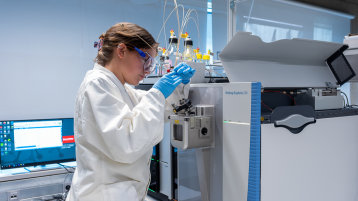
Ida Schirrmeister is studying for a Master’s degree in ‘Applied Chemistry’ at the Faculty of Applied Natural Sciences. During her second Master’s semester, she spent six months working as a research assistant at the ChEAF (Chemical and Environmental Analytics Core Facility) at TH Köln. In this interview, Ida gives an insight into her work and her experiences.
Ida, how did you come to work as a research assistant on the ChEAF project?
I was put in touch with the opportunity by a fellow student, who drew my attention to the DFG-funded research assistant post – specifically for early-career female researchers. I then applied and was successful. Incidentally, all research assistant posts are advertised via ILU in a Spaces folder for the faculty. You can also find student research assistant posts there, for example for Bachelor’s students.
What eligibility criteria did you have to meet?
I had to hold a bachelor’s degree and be enrolled as a student at the TH Köln. It was also a WHK position for early-career female researchers.
Was that your first job at the university?
Yes, before that I mainly worked in the catering industry – something I always really enjoyed doing as a way to unwind. At first I had my doubts, because BAföG restrictions meant I wasn’t allowed to hold several mini-jobs at the same time. Initially, I couldn’t imagine working at the university as well as studying.
Another point for me was the time factor. The WHK position was advertised as eight hours a week, which had to be worked during the week. For my catering jobs, I’d always set aside one day at the weekend so that I could focus on my university life during the week. In the end, though, thanks to the flexible arrangements and working hours, this wasn’t a problem at all.
What ultimately motivated you to take on the role of student research assistant?
The position was a brilliant opportunity for me to learn new things and get to know the research and areas of work at the faculty. I wanted to find out what I could do as part of my Master’s thesis and make some contacts.
Insights into the role of a WHK in the ChEAF project
 0 / 0
0 / 0
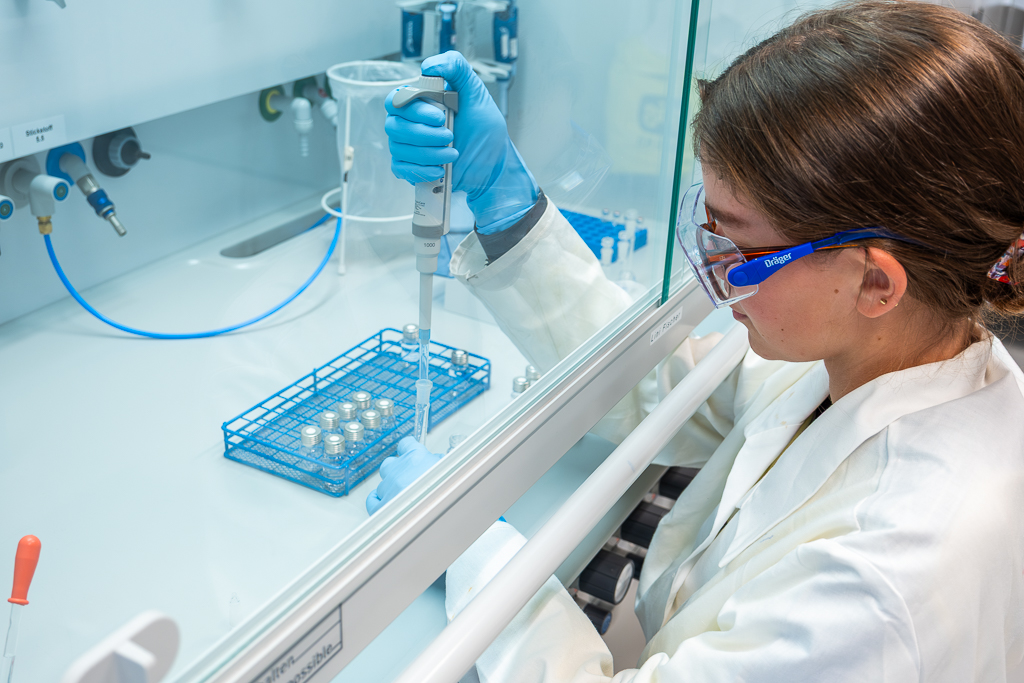
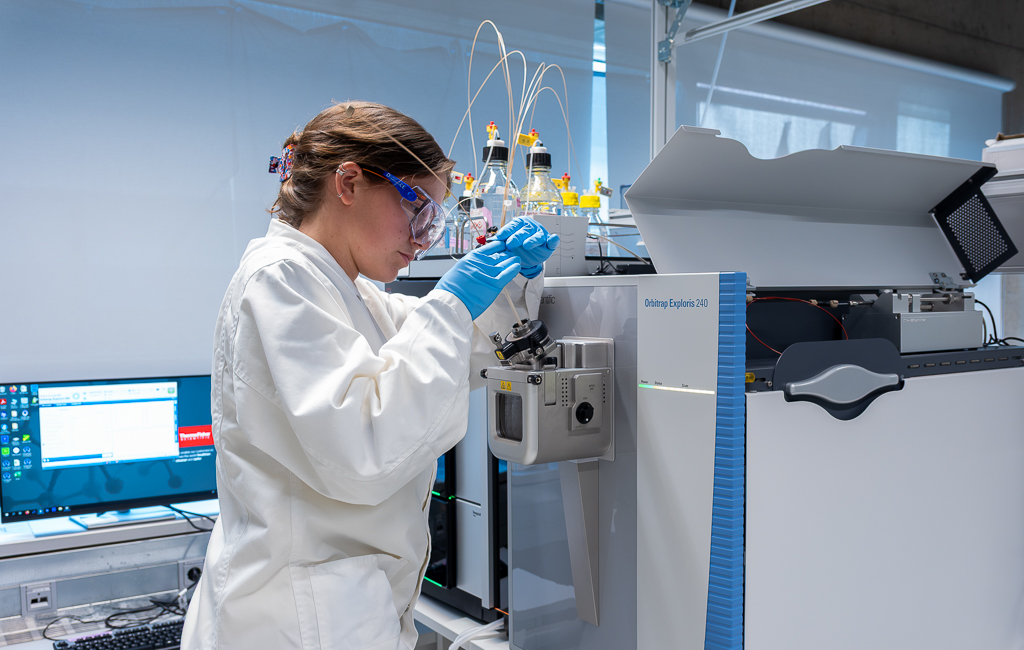
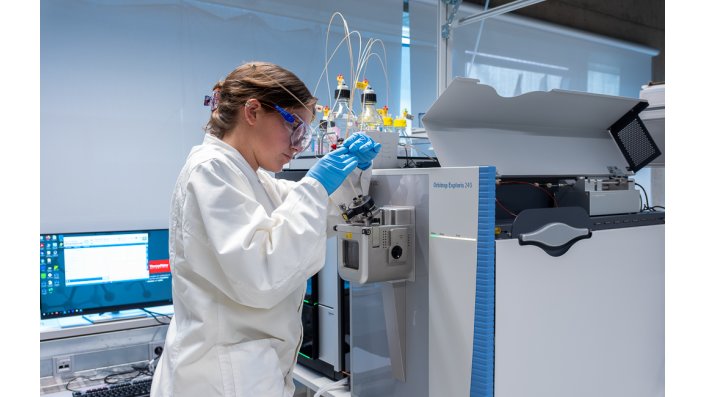
Ida Schirrmeister is preparing a sample for mass spectrometry. (Image: TH Köln - Media Lab)
 0 / 0
0 / 0
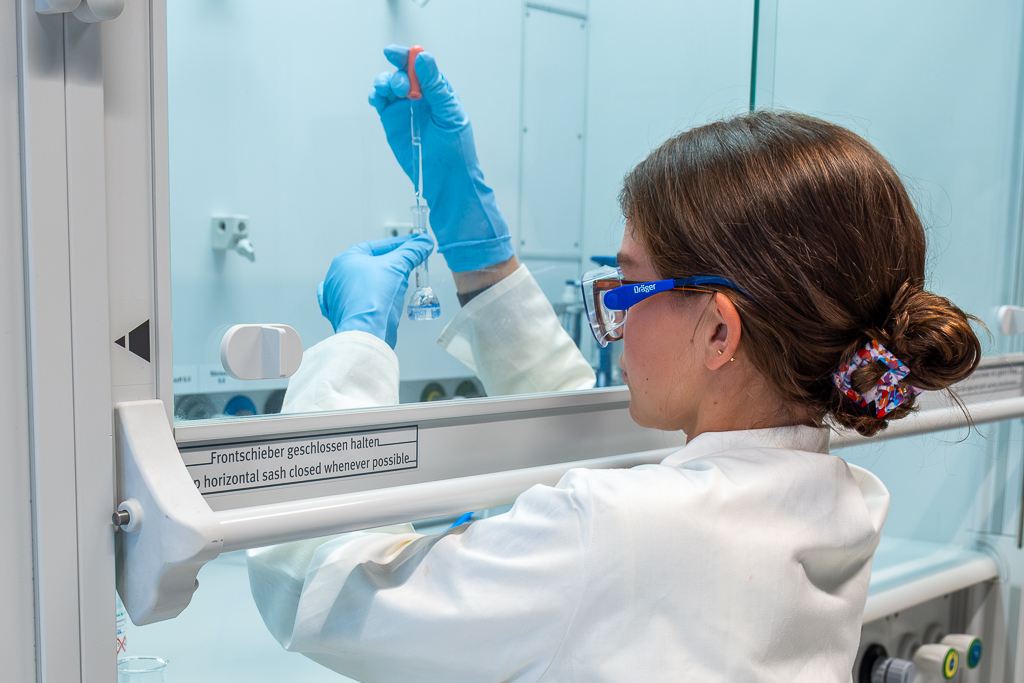
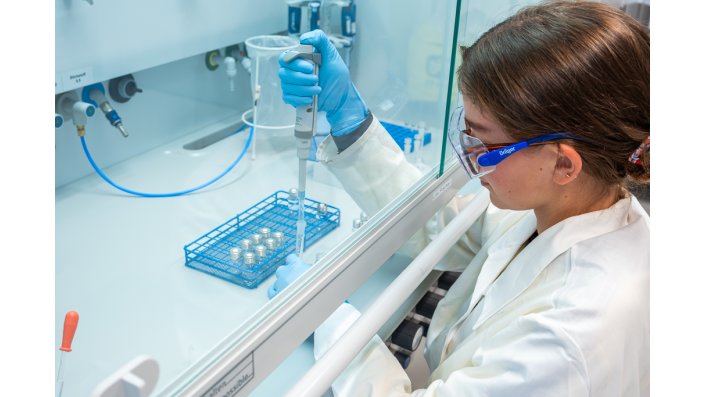
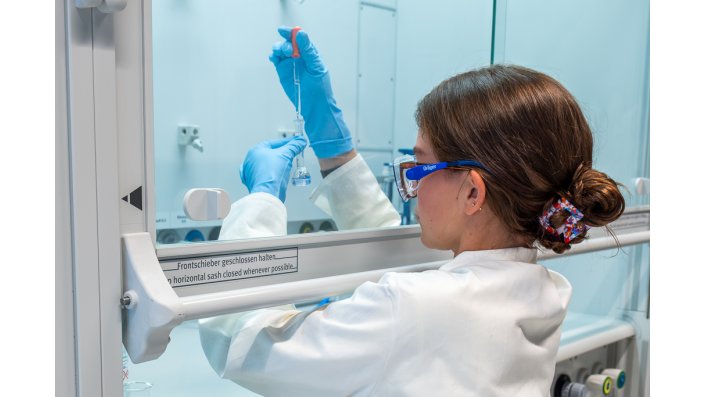
Ida Schirrmeister produced stock solutions and dilutions of bio-based surfactants. (Image: TH Köln - Media Lab)
 0 / 0
0 / 0
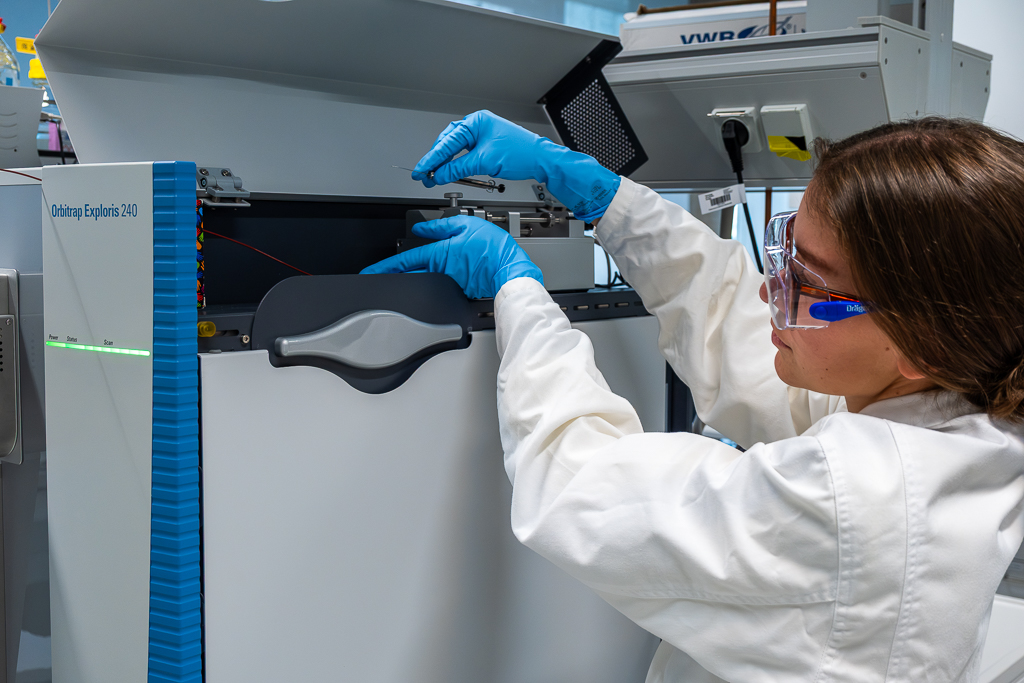
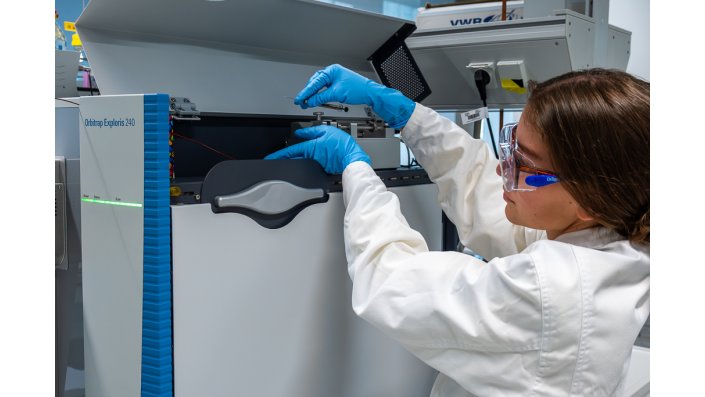
As a WHK, she worked on the high-resolution mass spectrometer. (Image: TH Köln - Media Lab)
 0 / 0
0 / 0
In order to measure the bio-based surfactants accurately, Ida Schirrmeister had to, amongst other things, calibrate the mass spectrometer. (Image: TH Köln - Media Lab)
How did you settle into the role?
On the first day, my supervisor Jaqueline Fischer, a PhD student at the Faculty of Applied Natural Sciences, introduced me to her research topic and the current state of her research, and explained my remit to me. A lot of it was new to me, for example the analytical measurement methods such as high-resolution mass spectrometry and liquid chromatography, which I’d never come across before. Jaqueline then gradually introduced me to the various tasks.
What specific tasks did you carry out?
One key focus was sample preparation: as part of her research, Jaqueline is investigating bio-based surfactants and developing a method to qualify and quantify them using liquid chromatography coupled with high-resolution mass spectrometry (LC-HRMS). I assisted her with this method development by preparing stock solutions and dilutions. We then analysed these samples using various solvents in order to investigate their effect on peak intensity and stability and to stabilise them.
I have gained a deep insight into the development of the methods and the selection of solvents, and have learnt, step by step, how to use the LC-HRMS – from cleaning the instrument to carrying out daily calibration before each measurement.
What did you take away from your time as a WHK?
I’ve learnt a great deal and gained a lot of practical experience – particularly in the laboratory, for example with pipetting, and in applying analytical methods. That wasn’t always possible during standard work placements. My confidence in using complex equipment has grown significantly.
It was also an important experience in terms of my own career goals: until now, I’d ruled out doing a PhD – I wanted to start working as soon as possible after finishing my degree. Now, thanks to the insights I’ve gained into the day-to-day work of PhD students, I can definitely see myself doing one. I was impressed by the way Jaqueline organises her tasks herself, how she tackles problems and tries to solve them.
Working as a WHK has also helped me enormously in terms of finding my direction: I now know that I want to write my Master’s thesis in Jaqueline’s field of research.
What advice would you give to students who are hesitant to take up a WHK position?
I can only encourage them to do so. Many people think they won’t have enough time or that it will distract them too much from their studies. That wasn’t a problem for me at all. On the contrary – I worked independently. I was closely involved in the research and took on responsibility, as I contributed to a research project as a student research assistant.
Thank you very much, Ida, for your candid comments and the fascinating insight!
July 2026