
20 young researchers discover chemistry
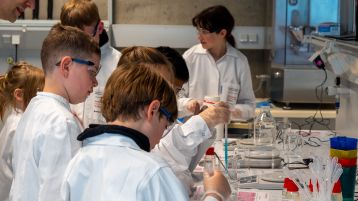
As part of the ‘Cologne Children’s University’, 20 children aged between nine and twelve were introduced to two fascinating areas of research at the Faculty of Applied Natural Sciences. With great curiosity and enthusiasm, the young researchers worked just like professional scientists in the laboratories on the Leverkusen campus.
Innovative filters for clean water
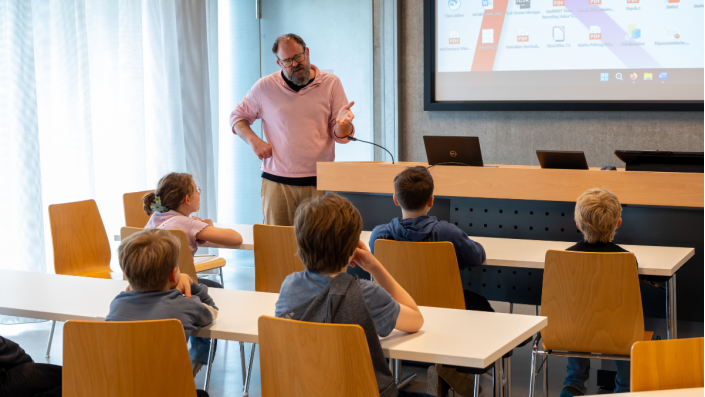
Professor Dr Stéphan Barbe from the Department of Applied Chemistry began his session with some fascinating questions about water quality: “Where does our water come from? And what actually happens to contaminated water?” Some of the children already knew that water is treated at sewage treatment works. Prof. Dr Stéphan Barbe explained to them that not all substances can be completely removed from the water.
“We excrete many medicines via our urine,” says Prof. Dr Stéphan Barbe, “and some of these substances are accumulating in water bodies, which can lead to health risks at higher concentrations.” To tackle this problem, Prof. Dr Stéphan Barbe and his research group are conducting research into innovative filters made from cellulose acetate and activated carbon, which are capable of adsorbing precisely these pollutants from the water.
Children’s University at the Leverkusen Campus
 0 / 0
0 / 0
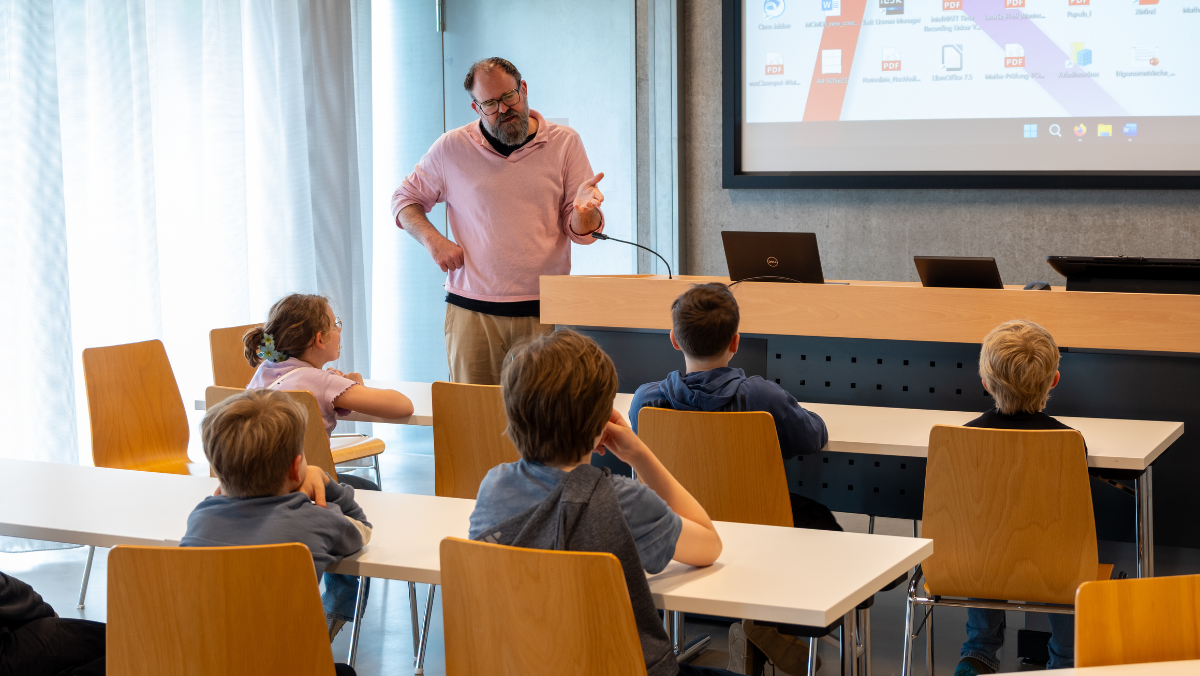
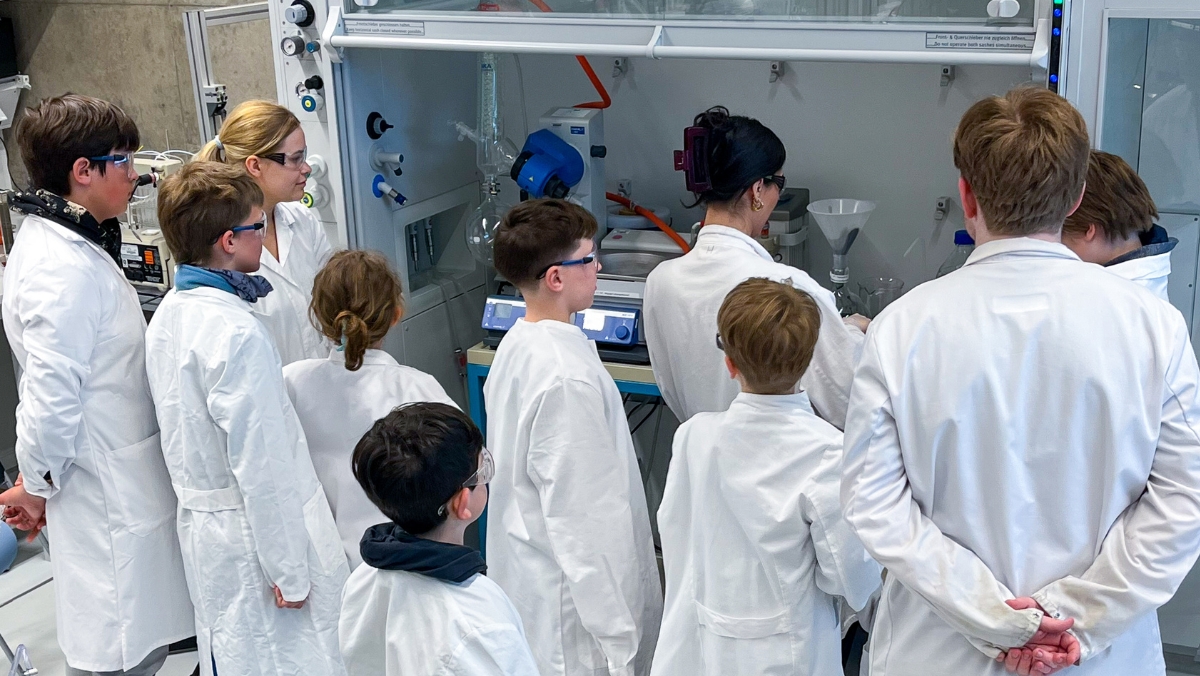
Prof. Dr Stéphan Barbe introduces the young researchers to water purification methods. (Image: TH Köln - Media Lab)
 0 / 0
0 / 0
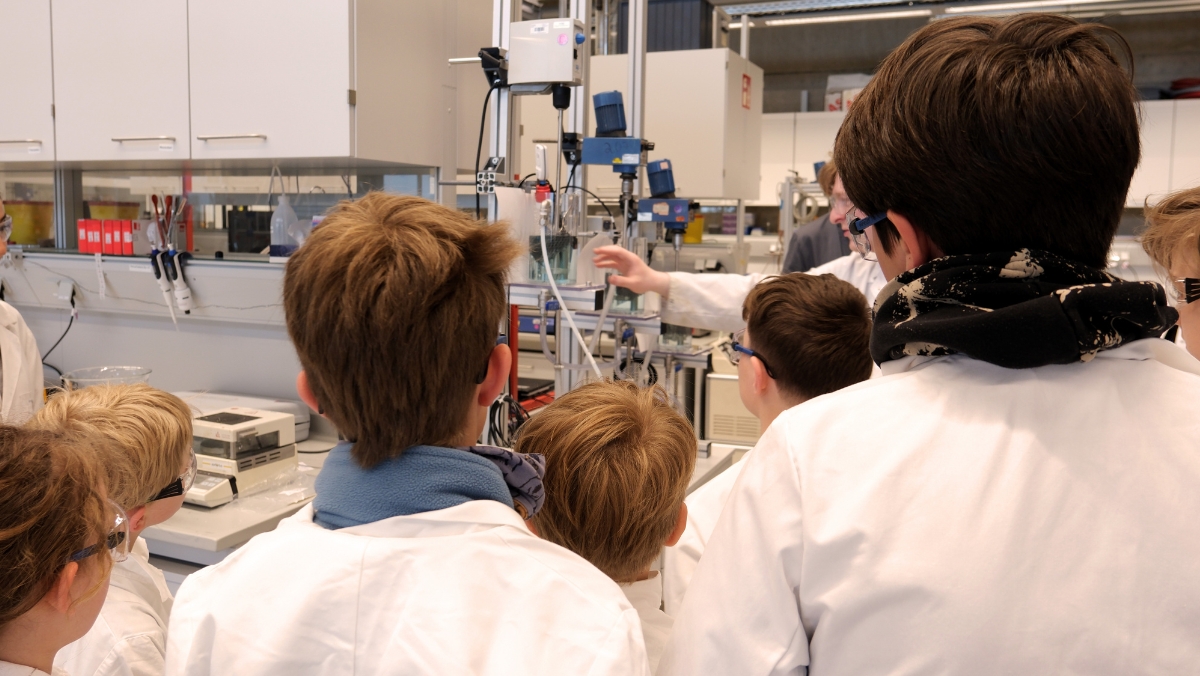
In the laboratory, the children observe the decolourisation process of water in a cascade of stirred tanks. (Image: TH Köln - Media Lab)
 0 / 0
0 / 0
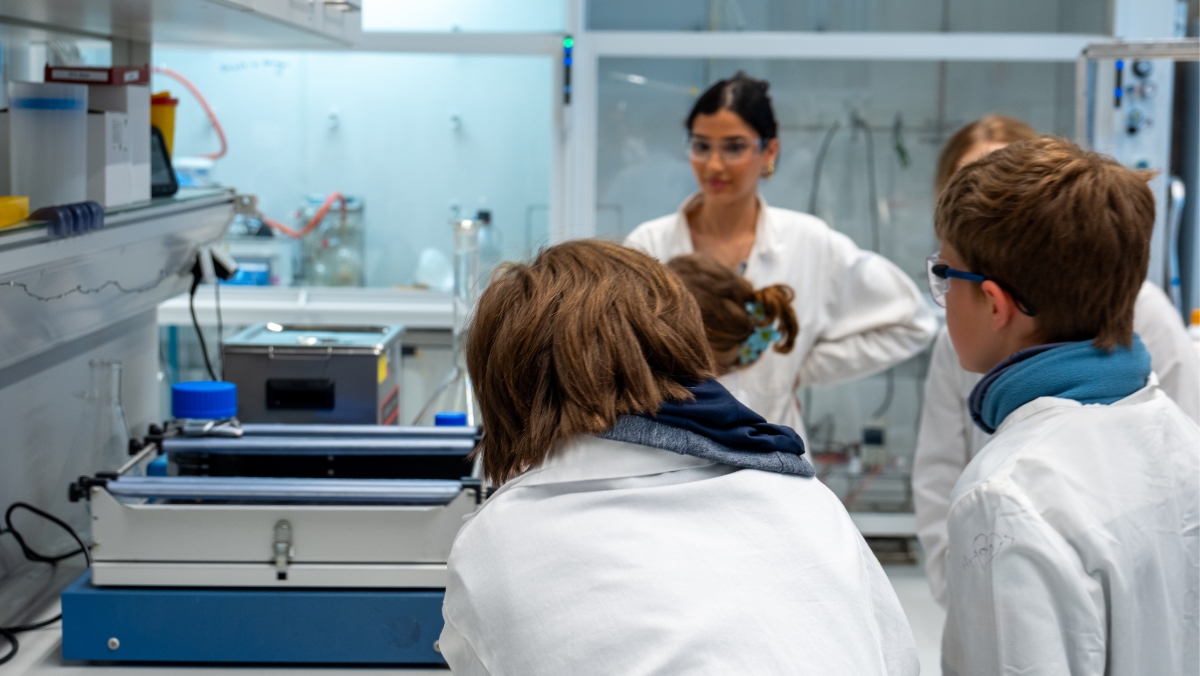
In addition, the budding scientists are observing preliminary experiments on pollutant removal using an orbital shaker. (Image: TH Köln - Media Lab)
 0 / 0
0 / 0
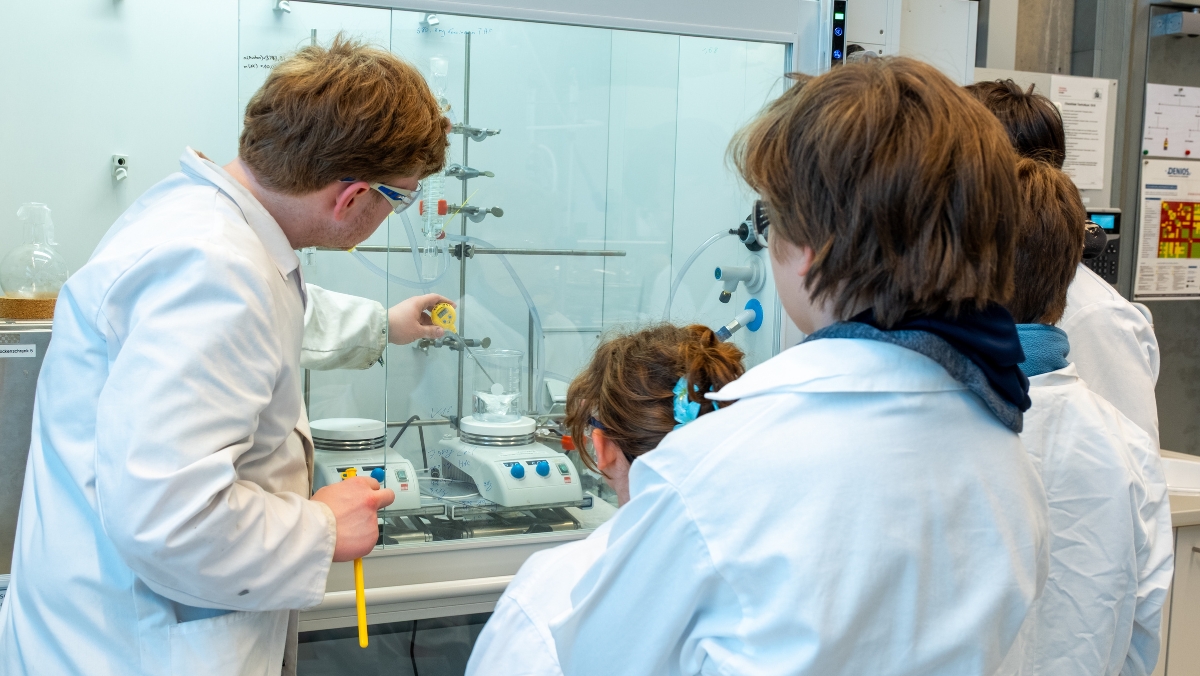
Hanae Sidali shows the children how solvents are recovered using a rotary evaporator. (Image: TH Köln - Media Lab)
 0 / 0
0 / 0
Daniel Esser explains to the Children’s University group how a heating stir plate works. (Image: TH Köln - Media Lab)
 0 / 0
0 / 0
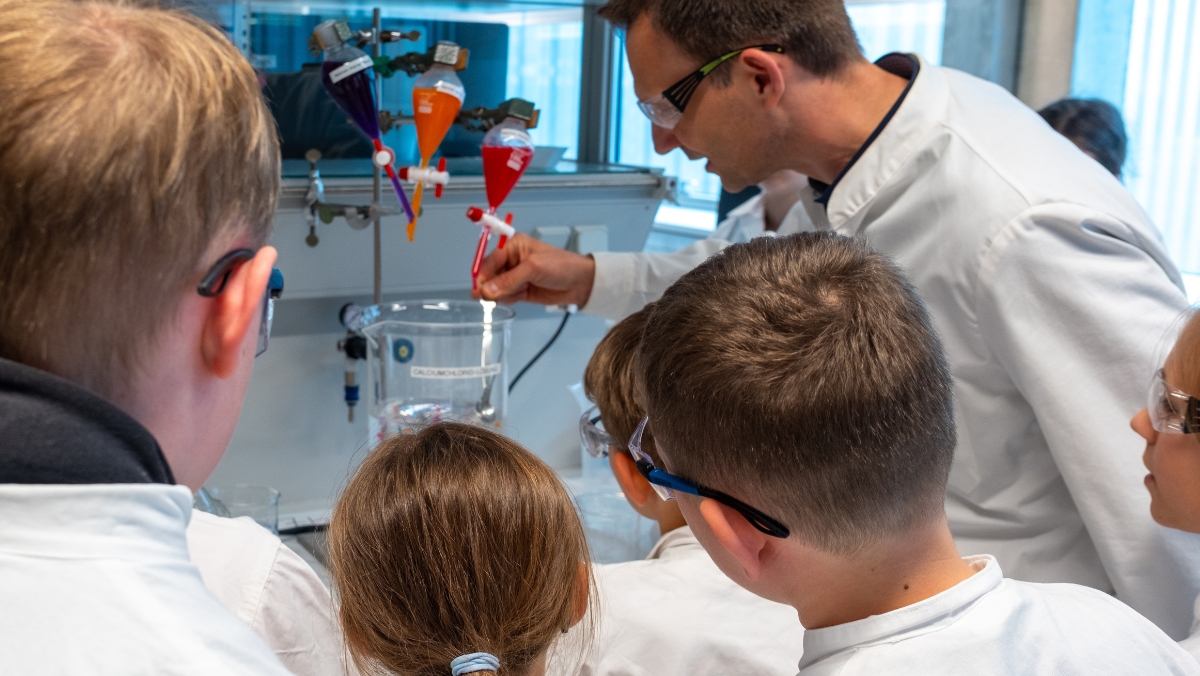
Prof. Dr Heiko Schiffter shows the children the set alginate beads (gel capsules). (Image: TH Köln - Media Lab)
 0 / 0
0 / 0
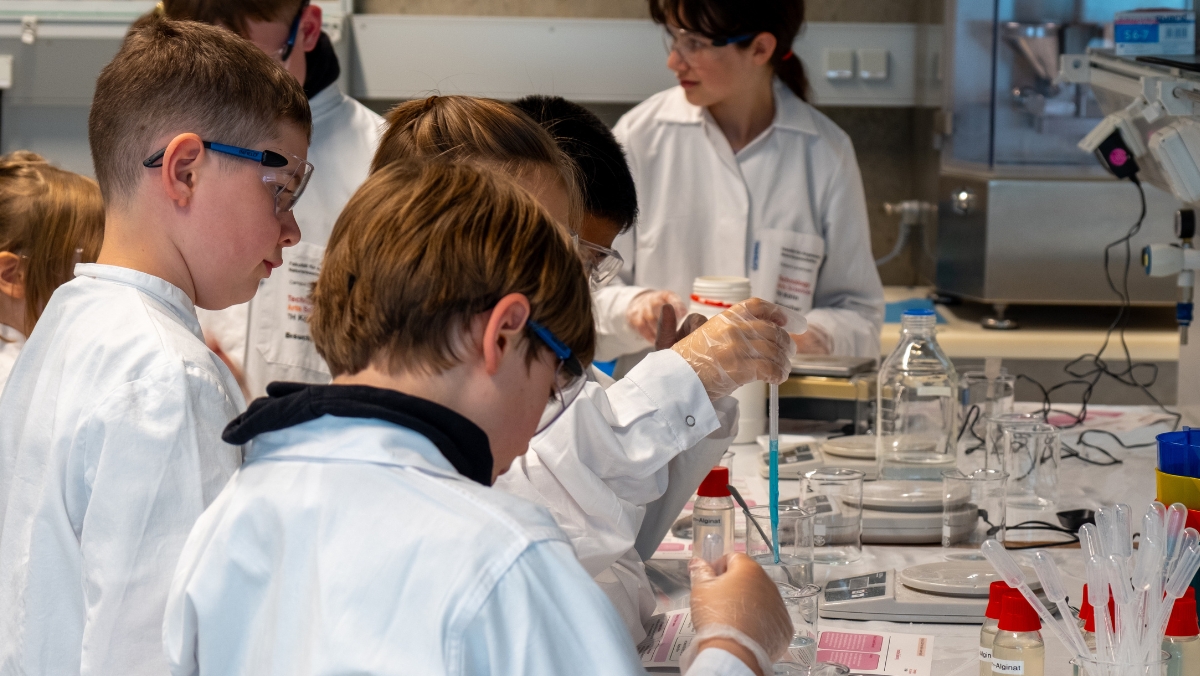
The young researchers add sodium alginate solution drop by drop to liquid calcium chloride using a pipette. (Image: TH Köln - Media Lab)
 0 / 0
0 / 0
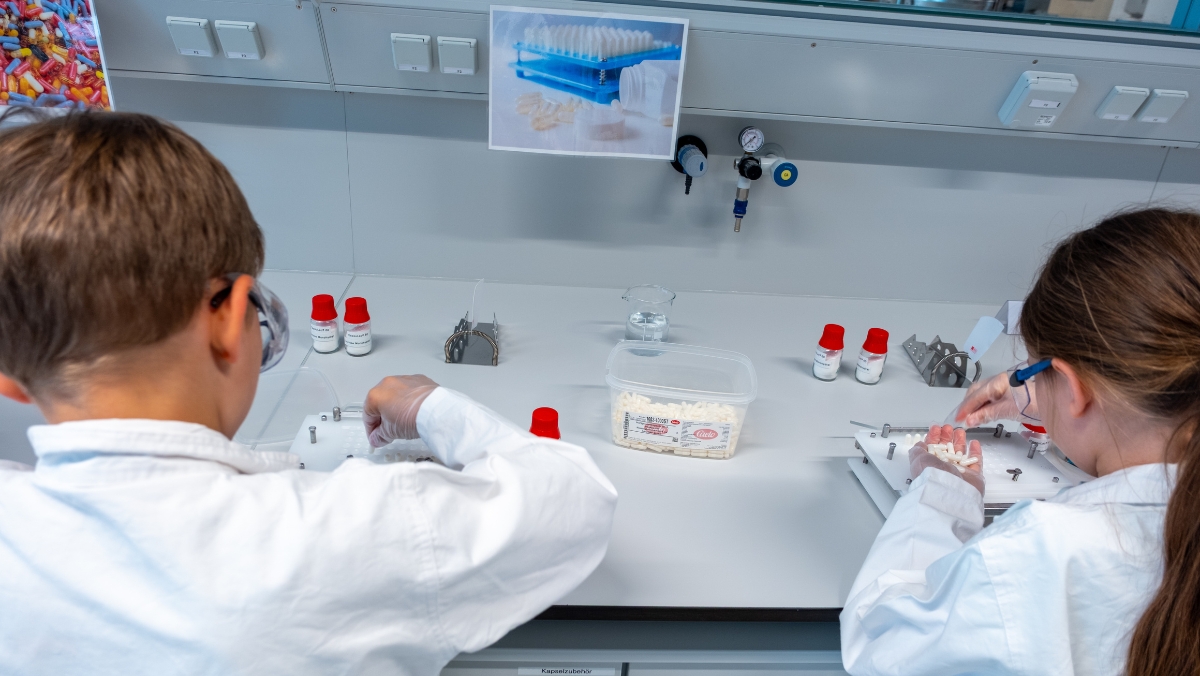
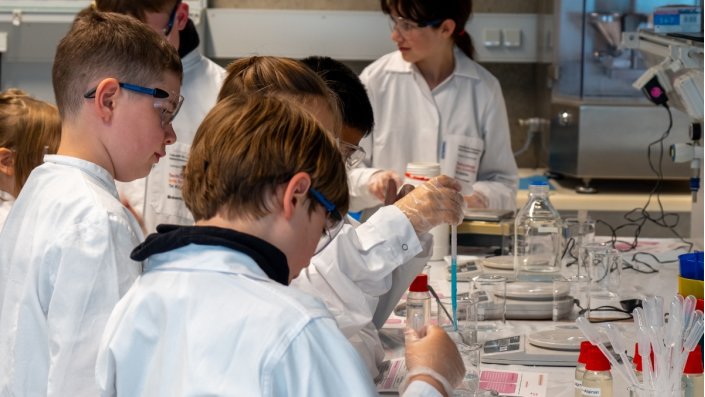
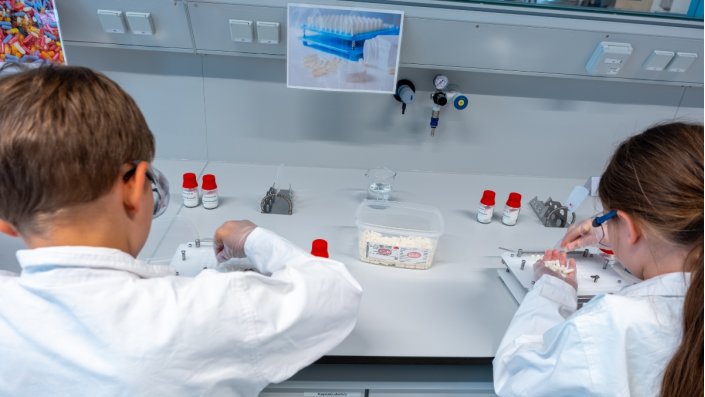
Two children are standing at the capsule-making table, making real capsules. (Image: TH Köln - Media Lab)
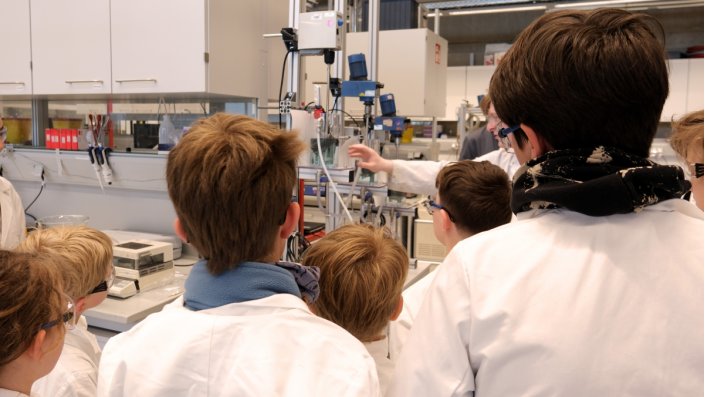
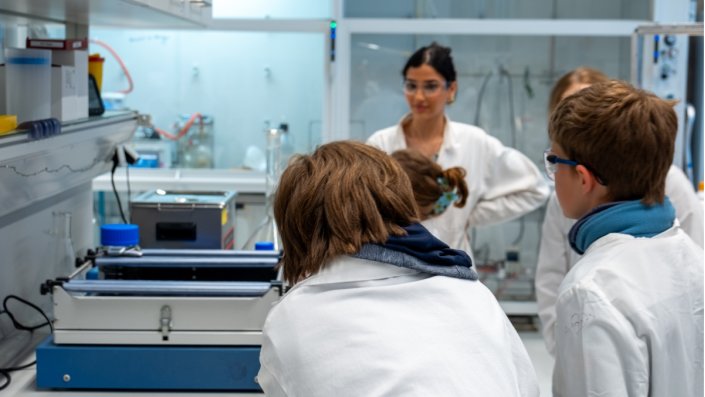
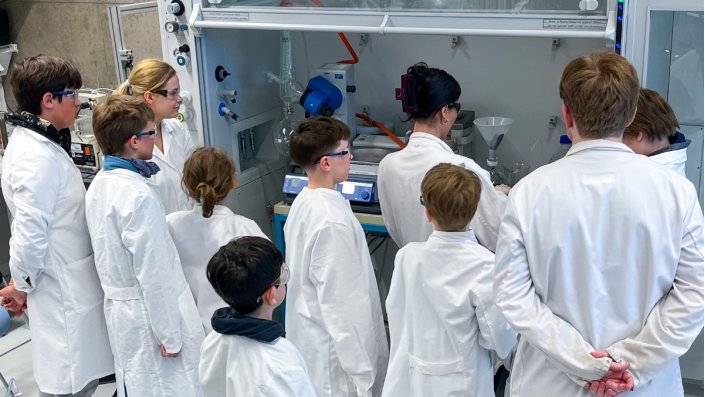
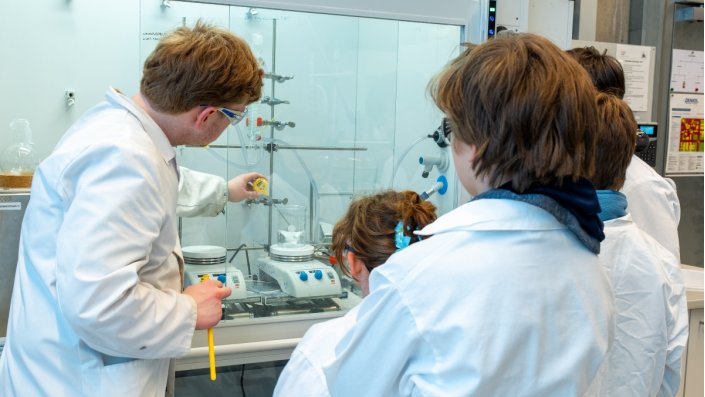
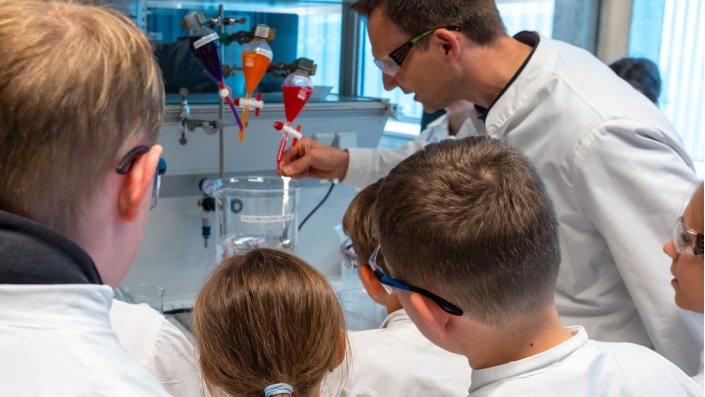
In the laboratory, the children examined the filters – made up of membranes and knitted fabrics – at close quarters and even made a membrane themselves. During a tour of the laboratory with Thomas Millenautzki, Melanie Schulz and the research assistants Daniel Esser, Hanae Sidali and Julia Jakobi, they then learnt about various methods of modern water purification. At a filtration system, they were able to observe how water mixed with dye – intended to simulate pollutants – was forced through the membrane under gentle pressure. In the process, the dye was adsorbed by the membrane, so that clear water emerged at the end of the filtration process. The young researchers also monitored the adsorption capacity of the activated carbon-coated knitted fabrics over an extended period, both in a stirred reactor and in individual bottles on a shaking plate. The water, which was originally blue, gradually became clearer and clearer.
Make your own genuine capsules – just like at the chemist’s
How do medicines reach the body safely and effectively? This question was the focus of attention in Prof. Dr Heiko Schiffter-Weinle’s pharmaceutical chemistry laboratory. Prof. Dr Heiko Schiffter-Weinle explained to the young researchers that many active ingredients are enclosed in small capsules, which protect them and enable their targeted release. Using a so-called capsule board, the children made real capsules – just like the ones from the chemist’s. The capsules contained only lactose monohydrate and no active ingredient.
In addition, Prof. Dr Heiko Schiffter-Weinle and his research assistants, Selma Chorevska and Victoria Behnke, introduced the Children’s University group to a second encapsulation method: ionic gelation. Ionic gelation is used in pharmaceutical research to produce microparticles containing an encapsulated active ingredient, which are formed using the same principle as the well-known bubble tea. Under supervision, the young researchers dyed sodium alginate blue and added the solution drop by drop to liquid calcium chloride using a pipette. In doing so, they were able to observe a genuine chemical reaction: the drops solidified immediately, forming small gel capsules that looked just like the pearls in bubble tea.
For the researchers at the faculty, the interaction with the children – particularly their many questions and unique perspectives – was a great source of enrichment. We look forward to more exciting events and to welcoming many more young explorers to the Leverkusen campus!
July 2026