
AquaSan: Removal of trace substances from water using functionalised textile coatings
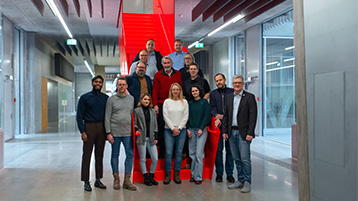
Project launch at the Leverkusen campus: Through the development of innovative, activated-carbon-coated spacer fabrics and a modular reactor system, the 'AquaSan' collaborative project aims to create a new class of materials that efficiently and sustainably absorb trace substances such as PFAS and bisphenol A from water. The coated carrier materials are to be used in sewage treatment works.
The challenge of trace substances in water
Regular tests confirm that drinking water in Germany is of a very high quality. Nevertheless, so-called trace substances – including particularly problematic ‘forever chemicals’ such as PFAS (per- and polyfluoroalkyl substances) and bisphenol A (BPA) – are increasingly finding their way into households via rivers and groundwater. To reduce these levels of contamination, the EU Municipal Waste Water Treatment Directive (KARL) provides for the introduction of a fourth treatment stage from 2045. In addition to the existing mechanical, biological and chemical processes, this additional stage is designed to specifically remove organic trace substances, such as those found in medicines and cosmetics.
Aims and approach of the ‘AquaSan’ research project
This is where the ‘AquaSan’ project comes in: a consortium of research institutions and SMEs is developing a new adsorption process based on activated carbon, thereby creating an alternative to energy-intensive processes such as ozonation, which breaks down organic molecules into smaller fragments so that they can be degraded. "Activated carbon is a highly porous form of carbon that adsorbs toxins, odours and gases", explains Prof. Dr Stéphan Barbe from the Faculty of Applied Natural Sciences at the Technical University of Cologne. "It has an enormous surface area, binds organic pollutants like a sponge and removes them from the environment." However, as the concentration of trace substances in water is usually very low, conventional activated carbon pellets are only of limited effectiveness due to their slow pore diffusion and uneven flow-through.
Launch of the new "AquaSan" research project
 0 / 0
0 / 0
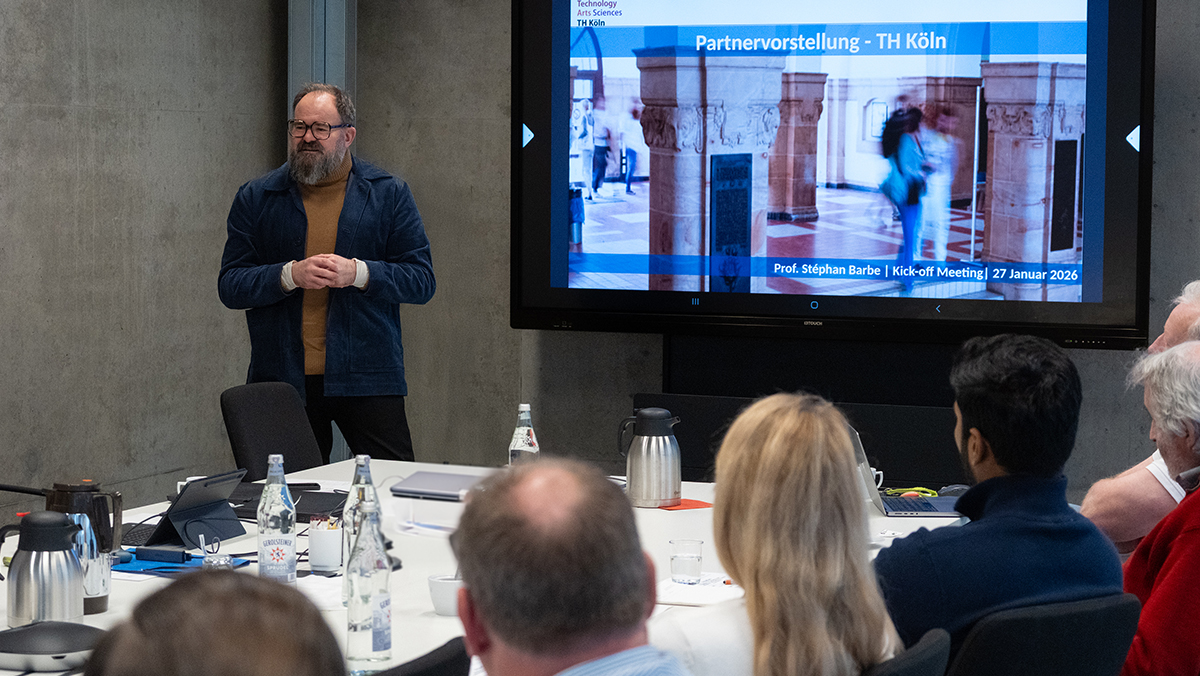
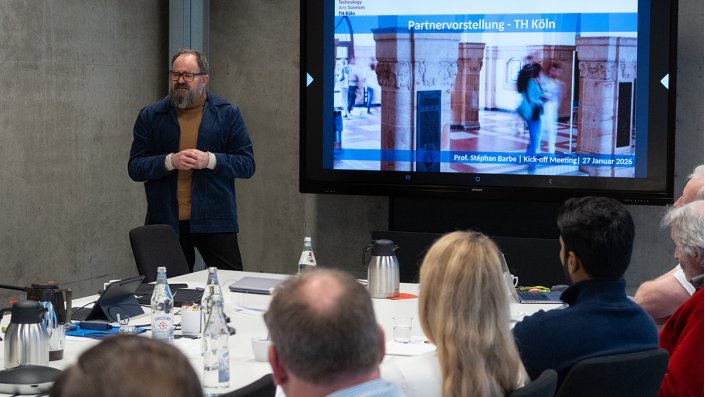
Prof. Dr Stephan Barbe provides an insight into research at the Leverkusen campus. (Image: TH Köln - Media Lab)
 0 / 0
0 / 0
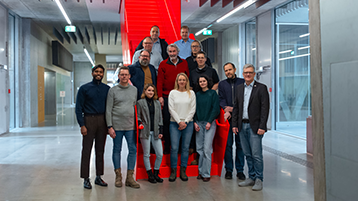
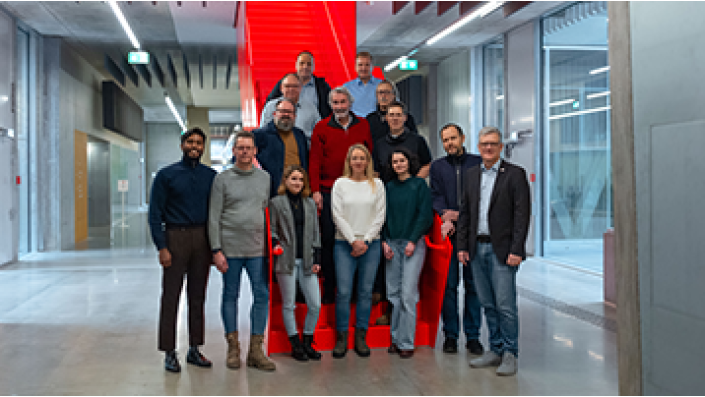
Kick-off at the Leverkusen campus with the project partners from "AqaSan". (Image: TH Köln - Media Lab)
 0 / 0
0 / 0
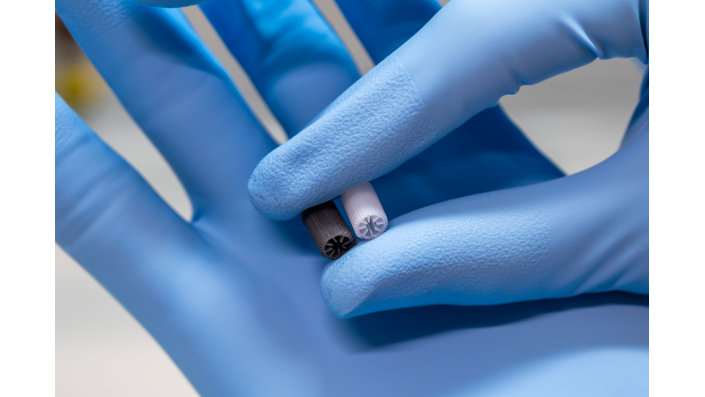
A high-impact polystyrene packing material (right) is coated with activated carbon particles (left) to adsorb BPA from water. (Image: TH Köln - Media Lab)
 0 / 0
0 / 0
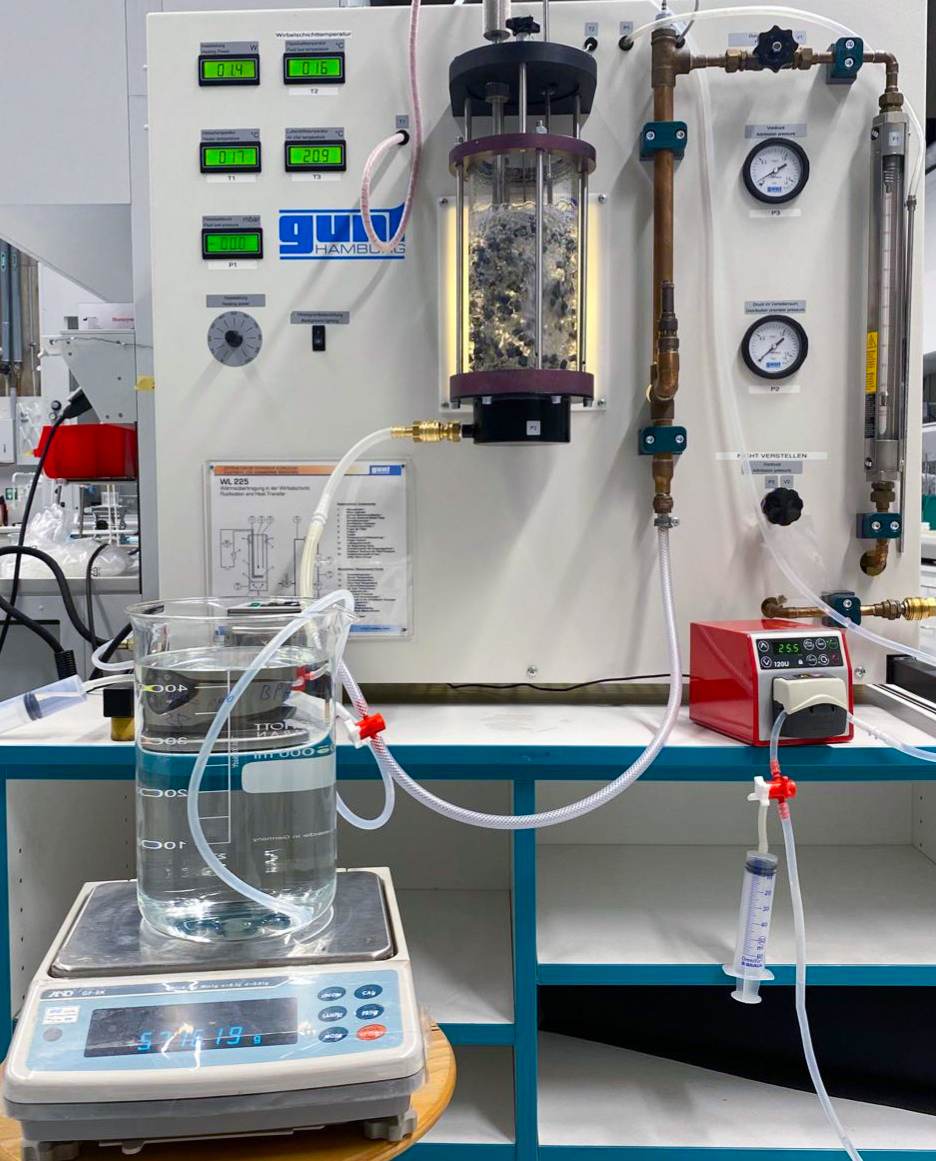
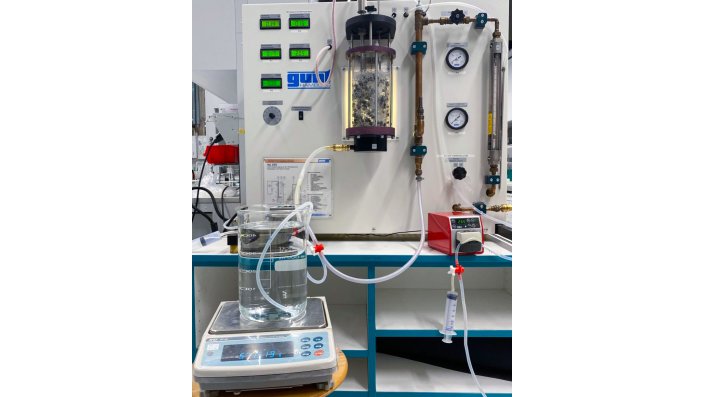
Filler media coated with activated carbon absorb BPA from the water inside the reactor. (Image: TH Köln - Media Lab)
Innovative activated carbon coating on textiles
AquaSan’s innovative approach involves coating carrier materials – known as textile spacer knits – with activated carbon micro- and nanoparticles, and developing a modular textile reactor system. Textile spacer knits combine a large adsorption surface area with low flow resistance, resulting in significantly more dynamic and uniform adsorption of PFAS and BPA from the water. 'We expect the coated materials to be readily regenerable and reusable. The open structure of the substrate materials should also reduce the risk of biofouling (the accumulation of plant and animal micro-organisms) and minimise the mechanical stress on the adsorbent layer,' adds Prof. Dr Stéphan Barbe.
Validation and practical application at real-world sites
The textile reactor system is to be designed to be modular and scalable, with the water flow adjusted to suit the specific load, in order to cater for a range of application scenarios. The plan is to develop a total of six reactors: three on a laboratory scale and three on a demonstration scale. “This carefully coordinated consortium brings together partners from across the entire value chain, from material development right through to the final application in various wastewater treatment plants,” said Prof. Dr Stéphan Barbe.
The role of TH Köln in the joint project
In the “AquaSan” project, the Technical University of Cologne acts as a key partner for materials development, design and analysis. Prof. Dr Stéphan Barbe and his research group have already developed a first generation of BPA adsorbents. The high-impact polystyrene (HIPS) packing media, coated with finely dispersed activated carbon particles (see figure), demonstrate very good adsorption of BPA in the range of 0.5 to 20 µg/L (BPA limit value = 2.5 µg/L). “These first-generation adsorbents are delivering good results, but their scalability is very limited. Applying our cost-effective technology to textiles offers an attractive opportunity to deploy the process on a very large scale,” explains Prof. Dr Stéphan Barbe.
The project’s instrumental analysis is centralised at the Chemical and Environmental Analytics Core Facility (ChEAF) on the Leverkusen campus, ensuring a consistent and comparable evaluation of the project results. Under the leadership of Prof. Dr Viktoriia Wagner and Prof. Dr Matthias Hochgürtel, trace substances in the ultra-low concentration range will be analysed, and water samples will be analysed and evaluated for the participating partners throughout the duration of the project.
Partners and funding for the collaborative project
The AquaSan consortium comprises TinniT Technologies GmbH, IEG Technologie GmbH, Essedea GmbH & Co. KG, engtec GmbH and the German Institute for Textile and Fibre Research in Denkendorf. Funding of around 510,000 euros is being provided by the Federal Ministry of Research, Technology and Space. The joint project was launched at a kick-off event on 27 January 2026 at the Leverkusen campus of the Technical University of Cologne.
July 2026