
Strengthening Egypt’s Flagship Water Education Program: Workshop for the IWRM MSc Program at TH Köln
As part of the DAAD-funded iWater Project, TH Köln – University of Applied Sciences hosted an Enhancement Workshop bringing together academic staff from Ain Shams University, Mansoura University, and TH Köln to further strengthen Egypt’s Integrated Water Resources Management (IWRM) Master's Program.
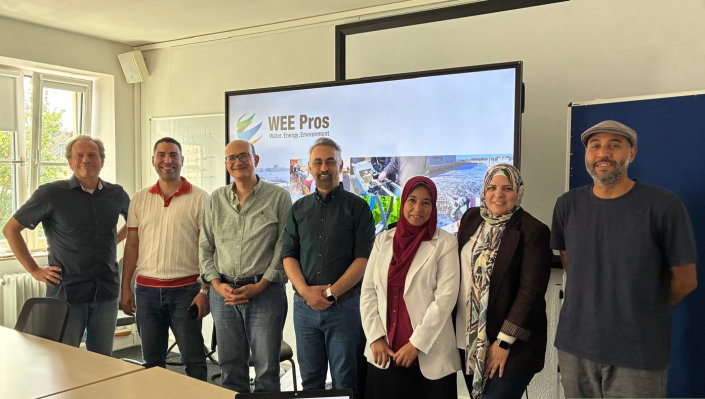 left to right: Lars Ribbe, Hassan Aboelnga (TH Köln), Sherif Elbadway (Mansoura University), Mustafa Nasereddin (IWRM Master’s alumnus), Salwa Abdou, Yasmeen Ahmed Essawy (Ain Shams University), Saher Ayyad (TH Köln)
(Image: F12/TH Köln)
left to right: Lars Ribbe, Hassan Aboelnga (TH Köln), Sherif Elbadway (Mansoura University), Mustafa Nasereddin (IWRM Master’s alumnus), Salwa Abdou, Yasmeen Ahmed Essawy (Ain Shams University), Saher Ayyad (TH Köln)
(Image: F12/TH Köln)
The workshop, which took part from 6th until 9th of July, 2026 at the Faculty of Spatial Development and Infrastructure Systems, forms part of the iWater Project, “Transforming Egypt’s Water Sector through Innovative Transdisciplinary Partnerships”, funded by the German Academic Exchange Service (DAAD) with support from the German Federal Ministry for Economic Cooperation and Development (BMZ). The project aims to strengthen higher education, foster university-business partnerships, and support the development of future water leaders capable of addressing increasingly complex water and climate challenges.
The IWRM Master's Program is the first interdisciplinary master’s program in Integrated Water Resources Management in Egypt and has evolved into a flagship initiative for water education in the country. The program serves as a national platform that brings together academia, government institutions, utilities, private sector actors, civil society organizations, and international partners to strengthen capacities for sustainable water management and climate resilience.
Jointly implemented by Ain Shams University and Mansoura University, with academic support from TH Köln, the program combines expertise from leading Egyptian and international scholars and practitioners. Its interdisciplinary approach integrates engineering, environmental sciences, water governance, economics, policy, digital transformation, and stakeholder engagement, providing students with the knowledge and practical skills required to address real-world water challenges.
During the workshop, participants reviewed the progress achieved since the launch of the program and discussed opportunities for further enhancement. Key topics included curriculum development, project-based learning, Master’s thesis supervision, quality assurance mechanisms, assessment methods, governance structures, and stakeholder engagement. Particular emphasis was placed on strengthening the practical orientation of the program through closer collaboration with water utilities, government agencies, private sector organizations, and development partners.
Prof. Dr. Lars Ribbe, Project Lead of the iWater Project at TH Köln, highlighted the importance of international cooperation and institutional learning in advancing water education:
“TH Köln has long-standing experience in developing and implementing Integrated Water Resources Management programs in different regions around the world. Through partnerships such as iWater, we can exchange knowledge, learn from diverse experiences, and jointly develop innovative educational approaches that respond to local needs while addressing global water challenges.”
Participants also discussed mechanisms for strengthening the governance of the program, including the establishment of an Advisory Board. In addition, key performance indicators were proposed to support continuous monitoring, evaluation, and improvement of the program.
A major focus of the workshop was enhancing project-based learning and applied research. Participants agreed on the importance of engaging practice partners in student projects and Master’s theses to ensure that learning is directly connected to real challenges facing the water sector. This approach not only strengthens the relevance of the curriculum but also creates pathways for internships, professional networking, and future employment opportunities for graduates.
Dr. Hassan Aboelnga, Coordinator of the iWater Project, emphasized the strategic importance of the initiative:
“The IWRM Master Program represents a major milestone in water education in Egypt and contributes to national efforts to enhance water security, climate resilience, and sustainable development. Through the iWater Project, we are supporting a unique educational model that connects universities with industry, government institutions, and society.”
He added:
“The transdisciplinary partnership approach adopted by iWater demonstrates how education, applied research, and stakeholder engagement can work together to address complex water challenges. It serves as a model for developing future professionals who can lead transformation and innovation in the water sector.”
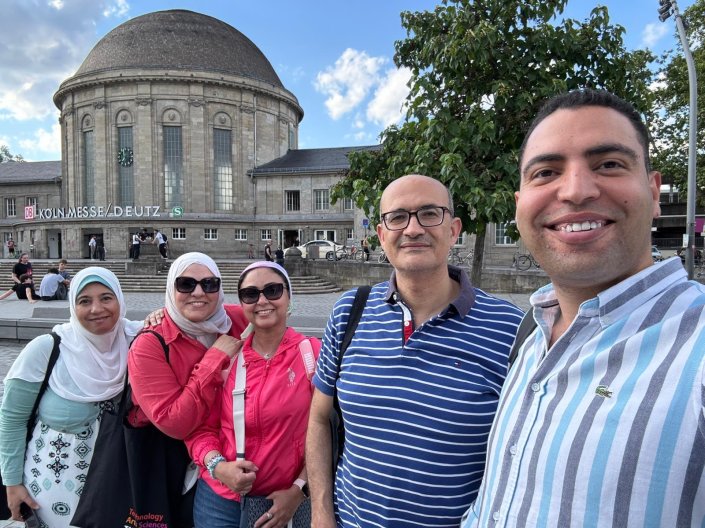 left to right: Salwa Abdou, Yasmeen Ahmed Essawy (Ain Shams University), Riham Ezzeldin, Sherif Elbadway (Mansoura University), Hassan Aboelnga (TH Köln)
(Image: Hassan Aboelnga)
left to right: Salwa Abdou, Yasmeen Ahmed Essawy (Ain Shams University), Riham Ezzeldin, Sherif Elbadway (Mansoura University), Hassan Aboelnga (TH Köln)
(Image: Hassan Aboelnga)
The workshop concluded with a shared commitment to continue strengthening the program. Partners agreed on a roadmap for the next phase of development, including the finalization of the iWater Handbook, enhancement of project assessment methodologies, refinement of program performance indicators, and expansion of stakeholder engagement activities.
About the iWater Project
The iWater Project (Transforming Egypt’s Water Sector through Innovative Transdisciplinary Partnerships) is funded by the German Academic Exchange Service (DAAD) under the program “University-Business Partnerships between Higher Education Institutions and the Private Sector”. The project is implemented by TH Köln in partnership with Ain Shams University and Mansoura University and aims to strengthen water education, applied research, stakeholder engagement, and labour market-oriented capacity development in Egypt.
July 2026