



Maintaining Friendships Over Long Distances with Innovative Tools
TH Köln, IWM, and ART+COM Develop New Ways to Connect and Share Experiences
Changes such as job-related relocations can cause friendships to fall by the wayside. The “VREUNDE” research project, led by the Cologne Institute for Digital Ecosystems (CIDE) at TH Köln, investigated how people can remain closely connected despite geographical distance. In collaboration with the Leibniz Institute for Knowledge Media (IWM) and the Berlin-based design agency ART+COM, new communication tools were developed. Four tested prototypes were compiled into a toolkit.
“In everyday life, changing circumstances make it difficult for long-standing, close friends to stay in close contact and maintain their bond,” says project manager Prof. Dr. Matthias Böhmer of CIDE. To stay in close contact, people often use mobile or social media in addition to in-person meetings and phone calls. “Longer video sessions, however, require undivided attention and are often perceived as exhausting. Short messages via messaging apps, shared photos, status updates, or ‘likes’ come across as relatively superficial. Moreover, they interrupt whatever one is currently doing and cannot be handled on the side.”
In the VREUNDE project, various hybrid interaction and communication mechanisms were therefore developed and tested over a three-year period—with the goal of creating novel and less rigid spaces for spontaneous and casual exchange, thereby strengthening bonds between friends. The development process was supported by the IWM’s expertise in media psychology, particularly with regard to design. The researchers investigated how groups of friends use different communication media and how this use relates to feelings of social connectedness across distance. This perspective complemented the development and testing of the new communication tools. “Until now, there has been very little research on the use of these so-called ‘physical-digital’ media in groups of friends,” said Böhmer, describing the project’s starting point.
Gallery
 0 / 0
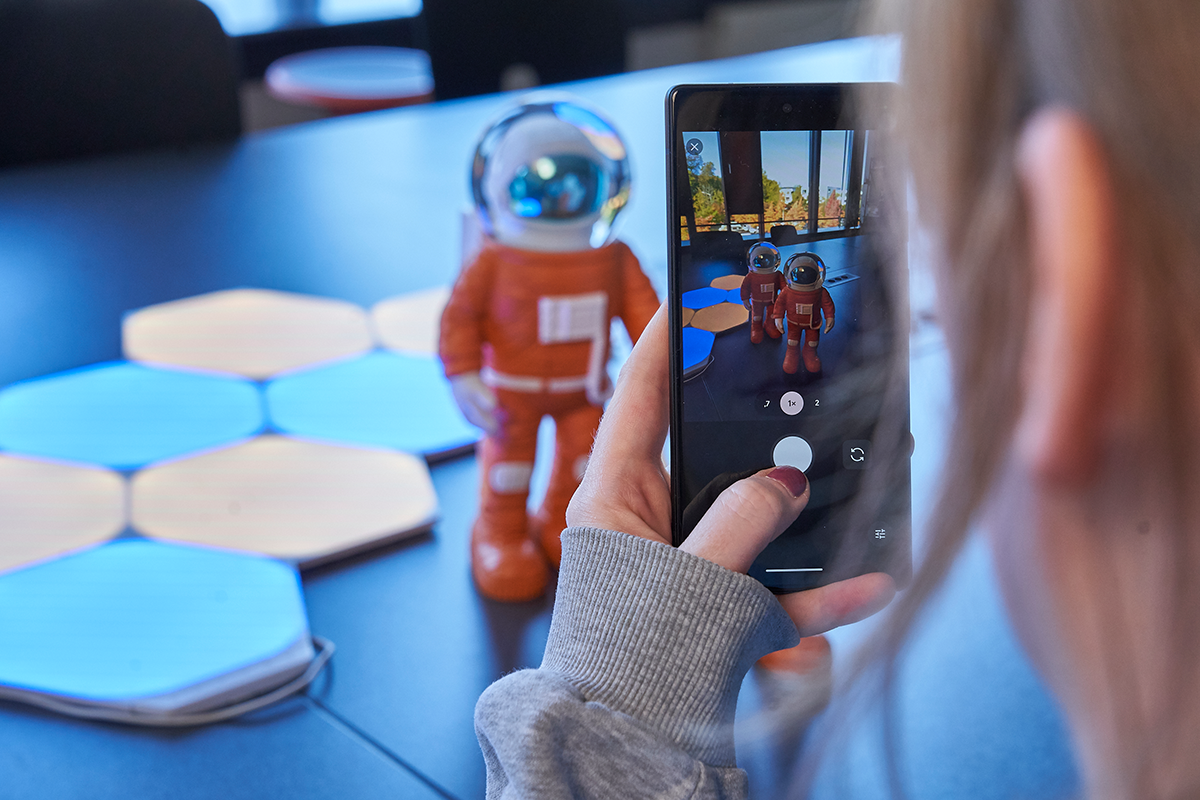
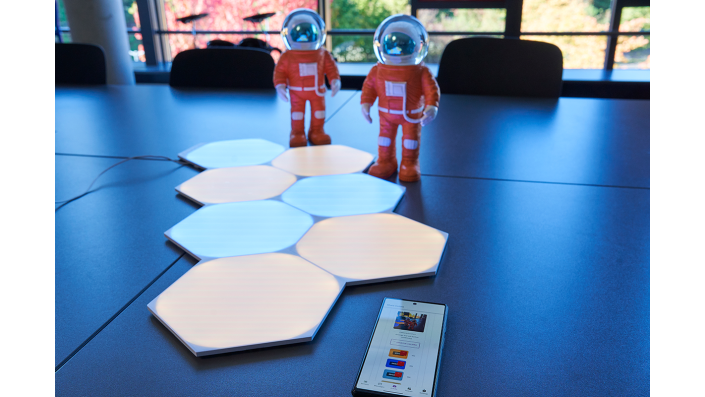
The “VREUNDE” research project has developed several tools designed to help people maintain friendships despite changes in their life circumstances, such as job-related moves. (Image: Monika Probst/TH Köln)
 0 / 0
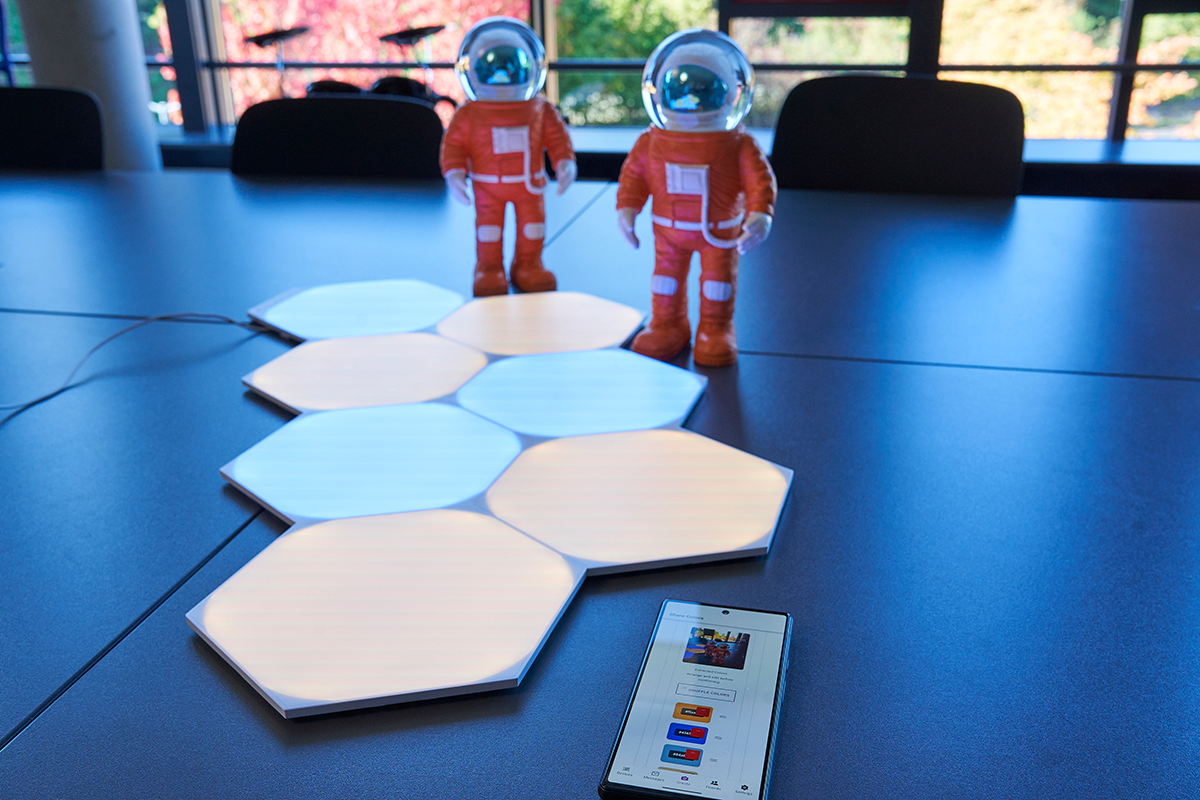
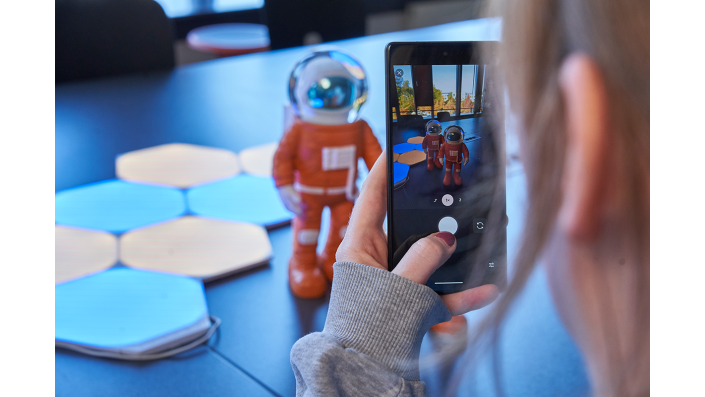
The PalPalette app lets you share your impressions and feelings through color and light. (Image: Monika Probst/TH Köln)
 0 / 0
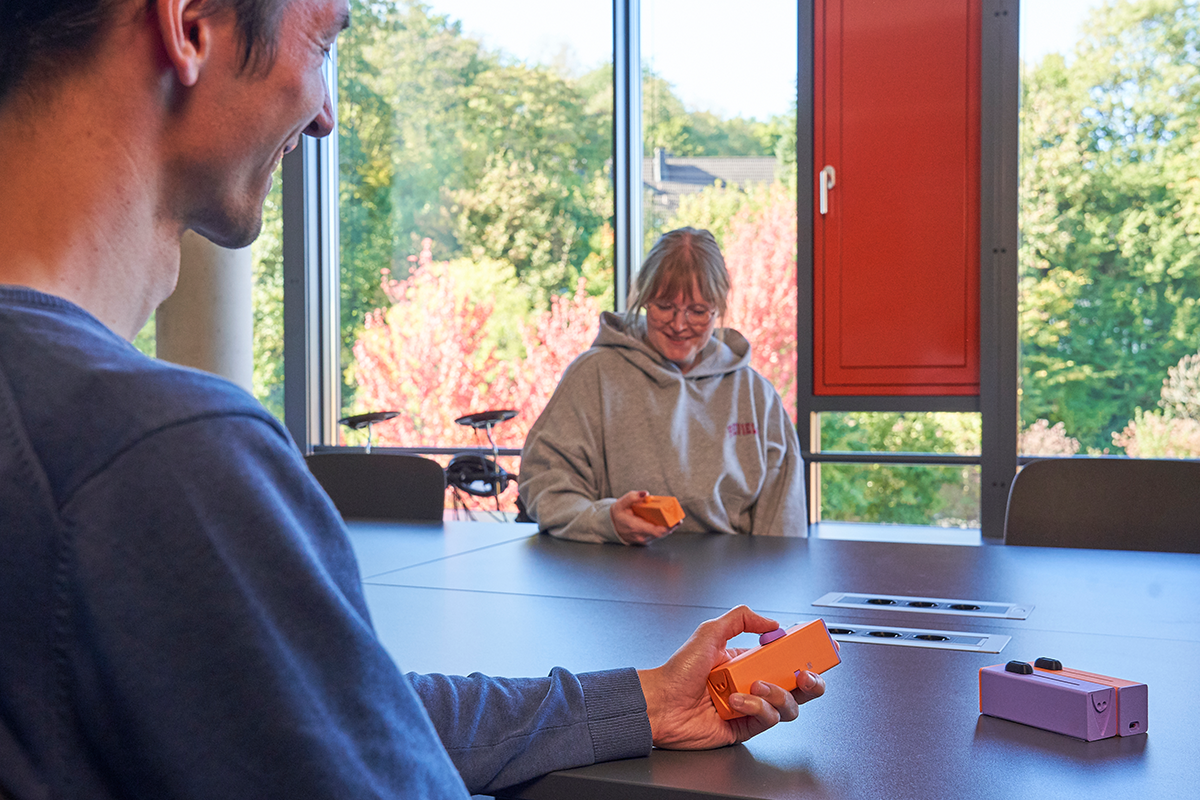
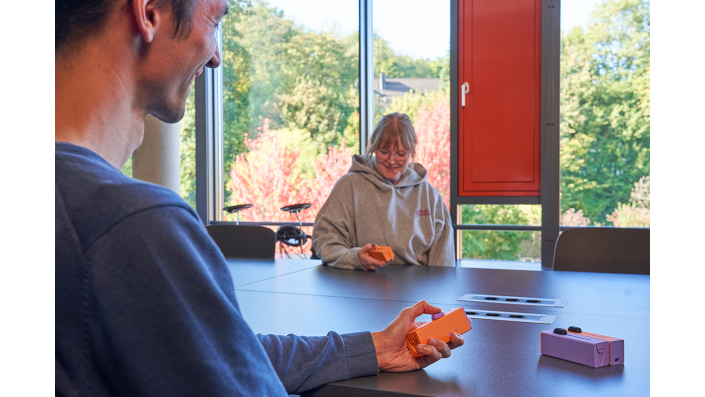
Slidget is designed as a physical tool and is intended for communication between pairs of friends in different locations. The image shows a laboratory setting. (Image: Monika Probst/TH Köln)
 0 / 0
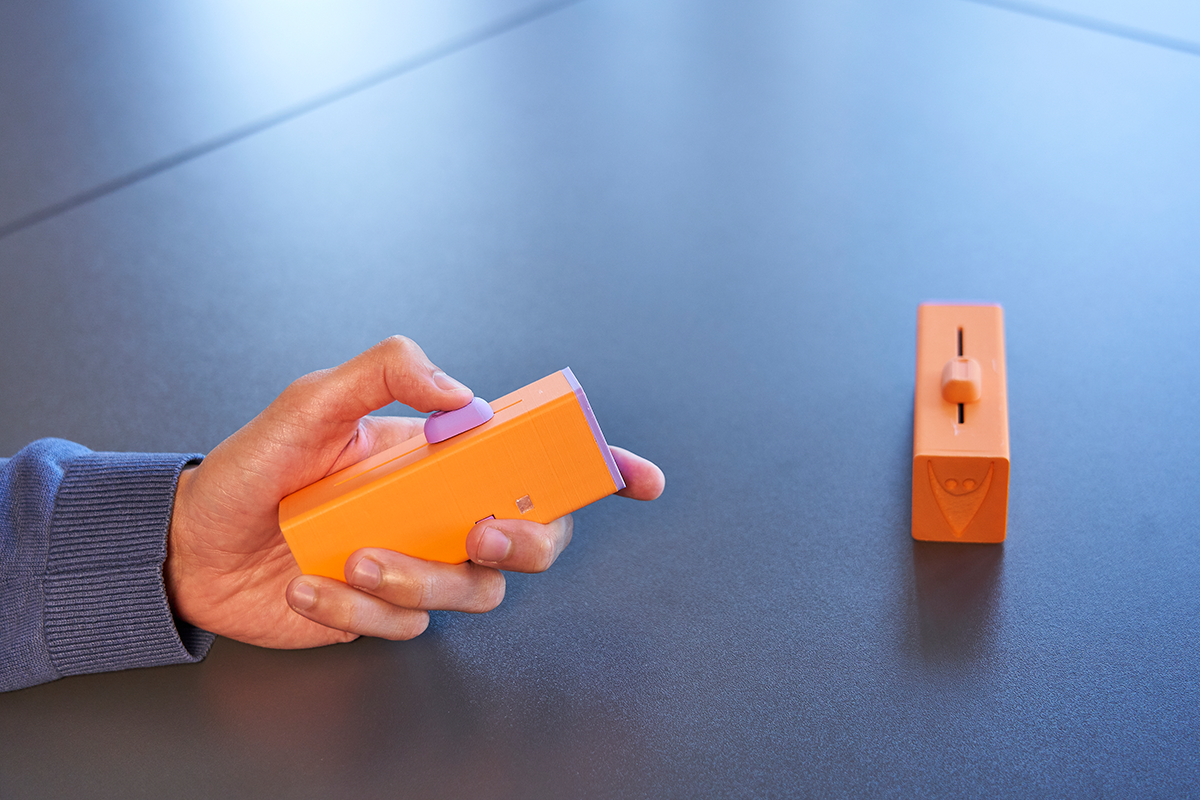
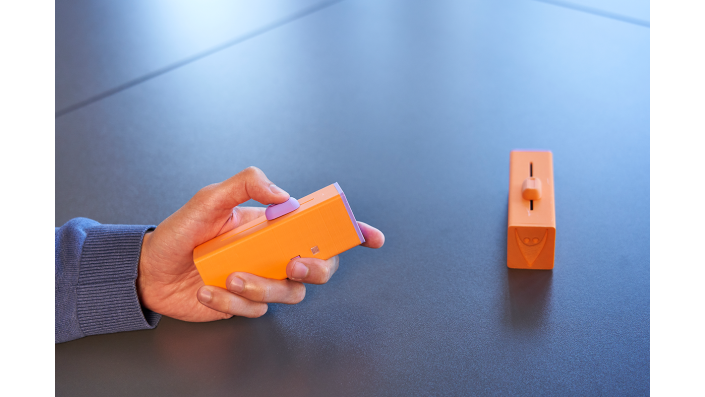
Here's how Slidget works: Each person can slide their own slider back and forth and feel the other person's resistance through haptic feedback. (Image: Monika Probst/TH Köln)
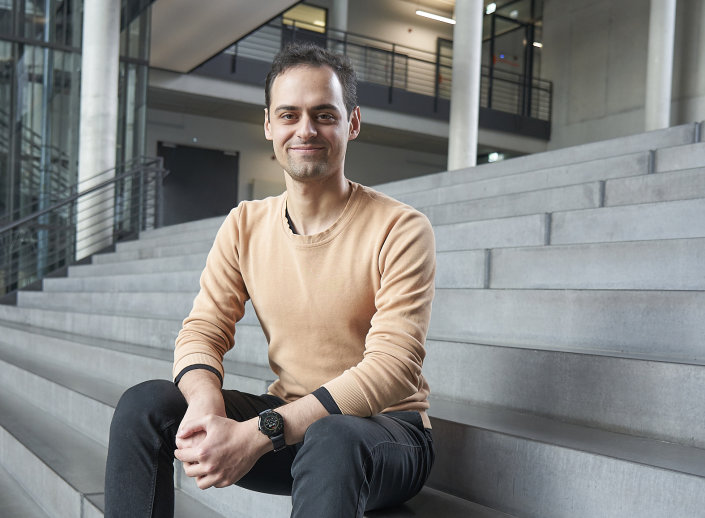 Soheil Ayati Kaggle
(Image: TH Köln, Monika Probst)
In total, the project produced twelve prototypes and concepts designed to make closeness tangible across distances—ranging from digital apps to connected physical devices. Four of these prototypes were further developed and then tested in collaboration with researchers from the IWM as part of a two-week usability study involving pairs and groups of friends aged 20 to 35. The tools examined were ultimately compiled into a toolkit.
Synchronous experiences, shared activities, shared impressions
The usability study evaluated the prototypes “Slidget,” “Magic Painting,” “POiPOi,” and “PalPalette” for their user-friendliness. Slidget is designed as a physical tool and intended for communication between pairs of friends. Each person can slide their own slider back and forth and feel the other person’s resistance through haptic feedback. Magic Painting is an app that connects users through collaborative, turn-based painting. Each person receives only a limited amount of paint per turn. Once the paint is used up, it’s the next person’s turn. In this way, a collaborative work of art emerges step by step.
Press Release 41/2026
dated November 19, 2026
With the POiPOi app, developed by project partner ART+COM, digital impressions can be firmly linked to the real world by associating photos with a message and a specific campus. If friends are physically at that campus, they can discover the moment and view the corresponding photo. The PalPalette app makes it possible to share impressions and feelings through color and light. Inspired by a photo or a mood, a color palette can be created and sent to light panels in friends’ homes, which then glow in the transmitted colors.
Valuable Contribution to Research—Further Publications Planned
“The study has shown that the prototypes have a lot of potential. In particular, entirely novel artifacts such as Slidget generated a great deal of interest during the study. At the same time, it became clear that the smartphone is considered immensely important for maintaining social connections, and applications for this medium are therefore particularly relevant,” explains Böhmer. Furthermore, the study highlighted many opportunities for technical improvements and further development of the prototypes, for example with regard to the software used or hardware components such as the geometry of the 3D-printed housings.
“All in all, with this project—which has resulted not only in physical-digital tools but also in several scientific publications—we have made a valuable contribution to this field of research,” says Böhmer. Further publications are planned regarding the “MoodCube” prototype—which uses a cube to send moods as light messages to friends—as part of research associate Sabine Huschke’s doctoral dissertation.
About the Project
The project “Maintaining Connections with Close Friends Across Distances through Physically-Digital Interaction and Communication Spaces” (VREUNDE) was led by Prof. Dr. Matthias Böhmer of the Cologne Institute for Digital Ecosystems (CIDE) at TH Köln. On behalf of CIDE, Prof. Dr. Stefan Bente, Prof. Dr. Christian Kohls, and Prof. Dr. Irma Lindt, as well as research associates Nick Crisci, Dominik Deimel, Sabine Huschke, and Vimal Darius Seetohul, also contributed their expertise. At the Leibniz Institute for Knowledge Media (IWM), Carolin Lehmann and Prof. Dr. Sonja Utz from the Everyday Media research group were involved. Another project partner was the Berlin-based design agency ART+COM. The project received approximately 950,000 euros in funding over three years from the Federal Ministry of Research, Technology, and Space.
November 2026