Future Lab
Creation of an innovative space with flexible furniture and forward-looking technologies that promotes agile working methods and cross-departmental collaboration between administration and citizens.
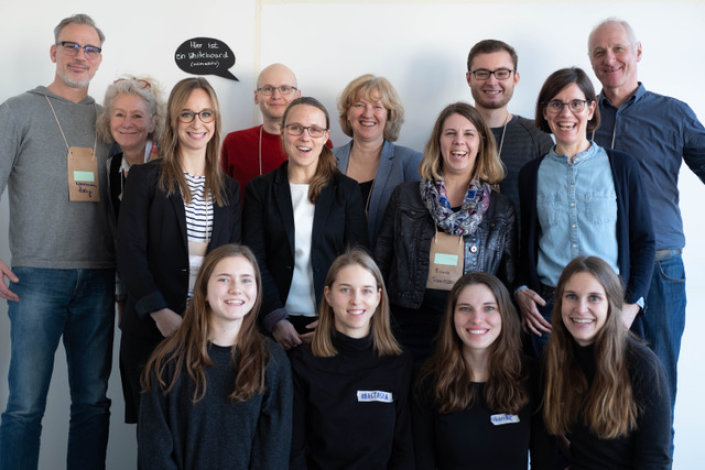 ZukunftsLabor Team
(Image: KISD 2019)
ZukunftsLabor Team
(Image: KISD 2019)
The Future Lab (ZuLa) is a joint innovation project between the City of Cologne and the Cologne International School of Design (KISD) at TH Köln. It was launched in April 2019 as part of administrative reforms as a methods lab for innovative digitalization design. The aim of the project is to drive forward digital transformation within the city administration and improve citizen-oriented administrative services through the use of service design.
Digital transformation is changing all areas of life and society as a whole – and it does not stop at the public sector. Administrative processes are undergoing fundamental change, as are citizens' demands for participation, transparency, and the quality of public services. This is where the idea of the Future Lab comes in.
The Future Lab sees itself as an open experimental space where city administration employees can work together with citizens to try out new working methods, redesign processes, and explore the potential of digitalization. With its flexible interior design, cutting-edge technical equipment, and a wide range of working materials, it offers ideal conditions for agile and cross-departmental collaboration.
As part of teaching collaborations with KISD, students work on practical projects that focus on the perspective of citizens. Together with the students, the Future Lab was equipped and further developed: from the design of the space to the development of methods and tools such as method cards that support agile methods—in particular the service design thinking method—in practice. This is a team-oriented innovation method that systematically develops creativity and focuses on the needs of users. Prototypical solutions are developed and tested.
A special focus is placed on the topic of accessibility. The cooperation between the city and the university aims not only to develop innovative administrative solutions, but also to train students. Through their active role in the project work, they are trained to become moderators and co-designers of municipal innovation processes.
The Future Lab is continuously being further developed: The findings from the student projects are incorporated into the “living” work process of the lab. In spring 2020, the Future Lab was modernized as part of a renovation and has enjoyed great popularity ever since. Numerous departments, offices, the administrative board, and committees use the premises regularly.
Supported by scientific guidance from DITES members Prof. Birgit Mager and Prof. Christian Kohls, Cologne is establishing itself as a pioneer in service design in the public sector. The cooperation between the City of Cologne and KISD, which is unique in Germany, is setting new standards in citizen-centered administrative development.
At a Glance
| Category | Description |
|---|---|
| Research project | Future Lab |
| Management | Prof. Birgit Mager, Prof. Dr. Christian Kohls |
| Faculty |
Faculty of Applied Social Sciences Faculty of Cultural Studies Faculty of Computer Science and Engineering |
| Institute |
Köln International School of Design (KISD) Cologne Institute for Digital Ecosystems (DITES) |
| Persons involved | DITES - Collaborators: Prof. Dr. Petra Werner, Prof. Dr. Christian Kohls |
| Partners |
City of Cologne Cologne International School of Design |
| Sponsors | City of Cologne |
| Duration | 2019 – ongoing |
| Website |