


Accessible media services for people with visual impairments
Equal participation in, and access to, culture, education, social life and information is a central goal of democratic societies. Public municipal libraries play an important role in providing this. In accordance with the UN Convention on the Rights of Persons with Disabilities, they have a mandate to increasingly develop into inclusive spaces for learning, encounter and awareness-raising.
Barrier-free access to information is particularly important for visually impaired and blind people. Public (municipal) libraries already offer a wide range of digital services, access options and media. However, equal access for people with disabilities is not always available. Special libraries, such as public audio libraries for the blind (dzb lesen, WBH, SBH, DBB, etc.), occupy a special place in the public library system. For many years, these libraries have played a central role in providing media to visually impaired and blind people, offering a wide range of audio books and digital services.
Digital transformation and legal impetus (BFSG)
Experience, particularly in urban libraries, shows that there is a lack of (digital) accessibility for visually impaired and blind people in many respects and there is still much untapped potential. Digitization offers new technical possibilities. The increase in commercial audiobook platforms, synthetic speech output on computers, tablets or smartphones, innovative apps and AI support enable a wide range of applications, some of which are novel. The new Accessibility Enhancement Act (BFSG) is also intended to promote the equal and non-discriminatory participation of people with disabilities and older people. Developments like these are raising expectations for inclusion and participation.
Research and change process
All of these are reasons to think about ways and possibilities for special libraries to work with suitable city libraries to improve access for blind and visually impaired people. Based on the example of the West German Library for the Blind (WBH) in Münster we are exploring how together, these libraries can develop structures and services for providing information and media to visually impaired and blind people and how to anchor them sustainably in the infrastructure. One of the goals is to survey their needs in terms of media use and related participation. With the help of continuous process support, the project combines research and change processes: research results are identified and reflected upon as impetus for possible further development and change throughout the process. It is the task of the process support to design formats for regular discussion and coordination.
At a Glance
| Category | Description |
|---|---|
| Research project | Weiter.les.bar - A pilot project for inclusive library work |
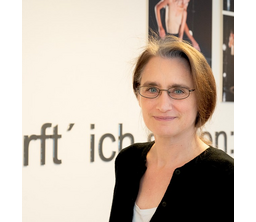
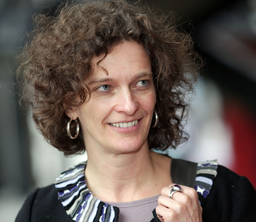
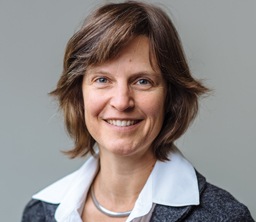
| Management | Prof. Dr. Katja Bartlakowski (Research Coordination), Prof. Dr. Andrea Platte (Coordination of Research-Practice Transfer), Prof. Dr. Isabel Zorn (Research) |
| Faculty |
Faculty of Information Science and Communication Studies / Faculty of Applied Social Sciences |
| Institute | Institute of Information Science / Institute for Childhood, Youth and Education/ Institute for Media Research and Media Education |
| Partners | WBH (West German Library of Audio Media for the Blind, Visually Impaired, and Print-Disabled), Manuela Reiser (WBH), Ute Luhmann (WBH), Stefan Burkhardt (Social Work Consulting and Support) |
| Sponsors | Sozialstiftung NRW (Social Foundation of North Rhine-Westphalia) |
| Duration | May 1, 2026 – April 30, 2028 |
Scientific support
The research is intended as scientific support for the model project ‘Inclusive Libraries for North Rhine-Westphalia’. Based on the experience, expertise and previous work of the WBH, the model project aims to initiate the long-term development of public libraries as inclusive places of reading for users with different backgrounds and impairments.